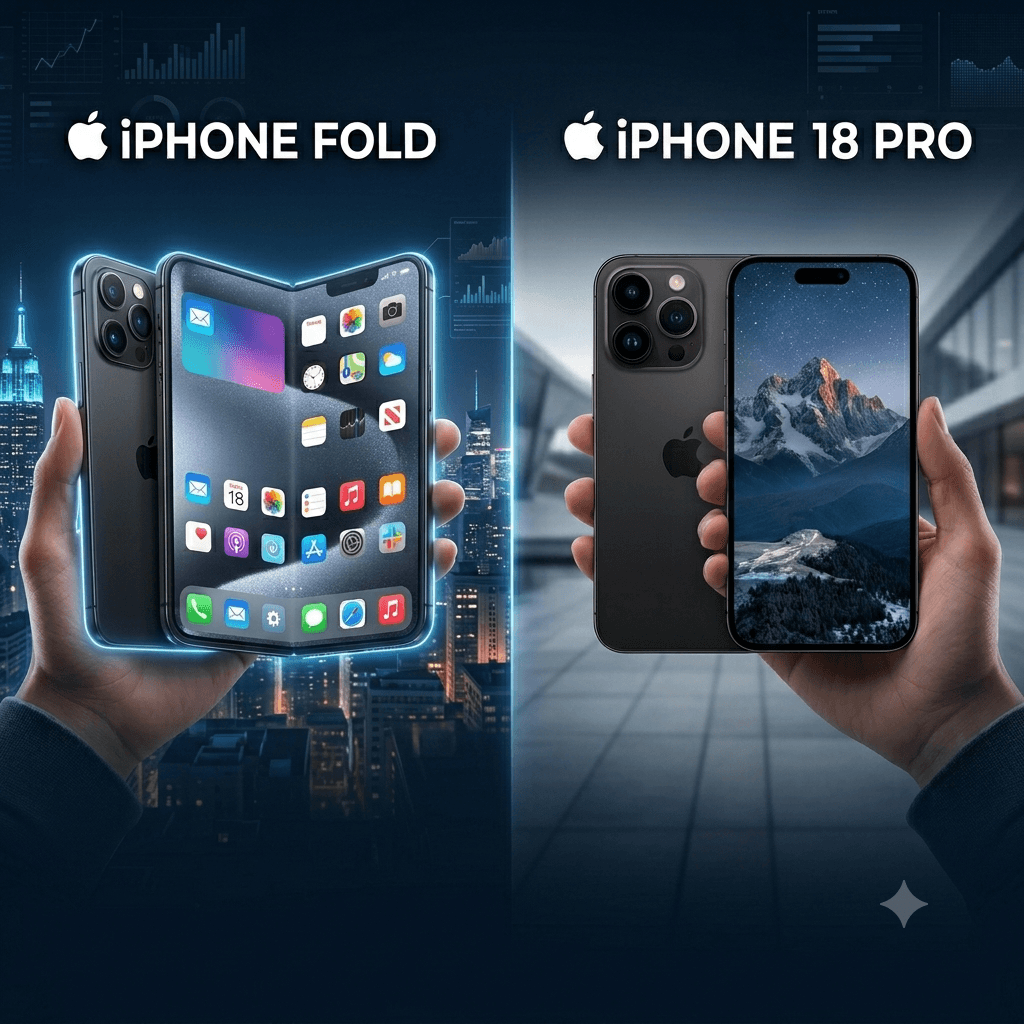

The smartphone ecosystem is on the verge of its most significant shake-up in a decade, but it is coming with a side of severe sticker shock. As tech enthusiasts look ahead to Apple’s traditional September reveal, all eyes are locked onto two highly anticipated devices: the groundbreaking, book-style iPhone Fold (potentially dubbed the iPhone Ultra) and the iteratively perfected iPhone 18 Pro. Yet, beneath the standard excitement of 2nm A20 Pro chips and variable aperture lenses, a collective intake of breath is happening across the industry. Leaks and financial data point to a reality where a standard Pro model pushes past the $1,300 mark and the first-generation foldable introduces the era of the $2,000+ mainstream iPhone.
To understand why Apple is normalizing these staggering retail prices, one must look at the global supply chain crisis affectionately—or terrifyingly—dubbed "RAMageddon." Over the past year, the global cost of semiconductor memory and NAND flash storage has surged exponentially. According to recent supply chain data analyzed by TechInsights, the 12GB of premium DRAM that cost Apple roughly $39 to source for the previous generation has skyrocketed to an estimated $145 for the upcoming iPhone 18 Pro. Combined with rising storage component costs, the raw manufacturing bill of materials (BOM) for the base Pro model has jumped from $582 to over $726, giving Apple little choice but to pass a portion of this burden onto consumers.
For the iPhone 18 Pro, this financial reality means breaking the sacred $999 or $1,099 baseline that consumers have grown accustomed to over the last few generations. Rumors suggest the base model will now likely land somewhere between $1,299 and $1,399. To justify this $200 to $300 hike, Apple is loading the device with genuine engineering milestones. The phone will debut the company’s first-ever 2nm mobile chip (the A20 Pro), yielding a 15% boost in speed while consuming 30% less power, paving the way for two-day battery life and seamless on-device Apple Intelligence. This is coupled with a heavily rumored variable-aperture main camera system that costs 50% more to produce but offers unmatched low-light precision and DSLR-like depth control.
Then, there is the star of the show: the iPhone Fold. For years, Apple let competitors like Samsung and Google navigate the experimental, bumpy waters of foldable glass, waiting to strike when the tech matured. Leaked details from iOS 27 developer betas reveal code optimized for dynamic screen configurations, practically confirming a book-style device that opens up to a sprawling 7.8-inch inner display and folds down to a squat 5.5-inch outer panel. Built with a durable titanium-and-aluminum frame and an advanced hinge that reduces the screen crease to a nearly imperceptible 0.15mm, this engineering marvel won't come cheap. Tiers are expected to start at a jaw-dropping $1,999, scaling all the way to $2,399 for the 1TB luxury version.
Estimated Retail Price Trajectory:
iPhone 18 Pro (256GB Base): $1,299 – $1,399 (Up from $1,099)
iPhone Fold (256GB Base): $1,999 – $2,320 (New Luxury Tier)
The curious part of this economic case study is how Apple uniquely bypasses traditional consumer resistance. While a massive price hike would spell disaster for almost any other smartphone manufacturer, Apple operates in a different financial stratosphere. Data from Counterpoint Research shows that iPhones routinely account for over three-quarters of all smartphone sales priced above $1,000 worldwide, securing an enviable 66% of the entire global smartphone industry's gross profit. Apple’s core demographic is fiercely brand-loyal and structurally affluent; for many premium buyers, an extra $200 broken down into monthly carrier financing installments is barely an inconvenience.
However, the strategy is not entirely without risk in today's macroeconomic landscape. While the ultra-premium segment is projected to grow by 3.5% this year, overall global smartphone shipments are anticipated to fall as casual users stretch the lifespan of their current devices. Pushing the iPhone 18 Pro into the $1,400 territory and introducing a $2,000 foldable may widen the rift between Apple’s elite tier and everyday consumers. Casual upgraders might finally draw a line in the sand, choosing to stay with base models or older generations rather than subsidizing the rising costs of cutting-edge memory and AI architecture.
Ultimately, the concurrent arrival of the iPhone Fold and the pricier iPhone 18 Pro marks a paradigm shift for Apple. It transitions the company from an era of accessible premium technology into one of unapologetic luxury positioning. Apple is wagering its peerless brand equity against an unforgiving global components market, betting that consumers will willingly pay more for true innovation. Whether this bold pricing strategy cements Apple’s dominance or creates an opening for more aggressively priced competitors remains to be seen—but come September, the luxury smartphone ceiling is officially being shattered.
NEVER MISS A THING!
Subscribe and get freshly baked articles. Join the community!
Join the newsletter to receive the latest updates in your inbox.