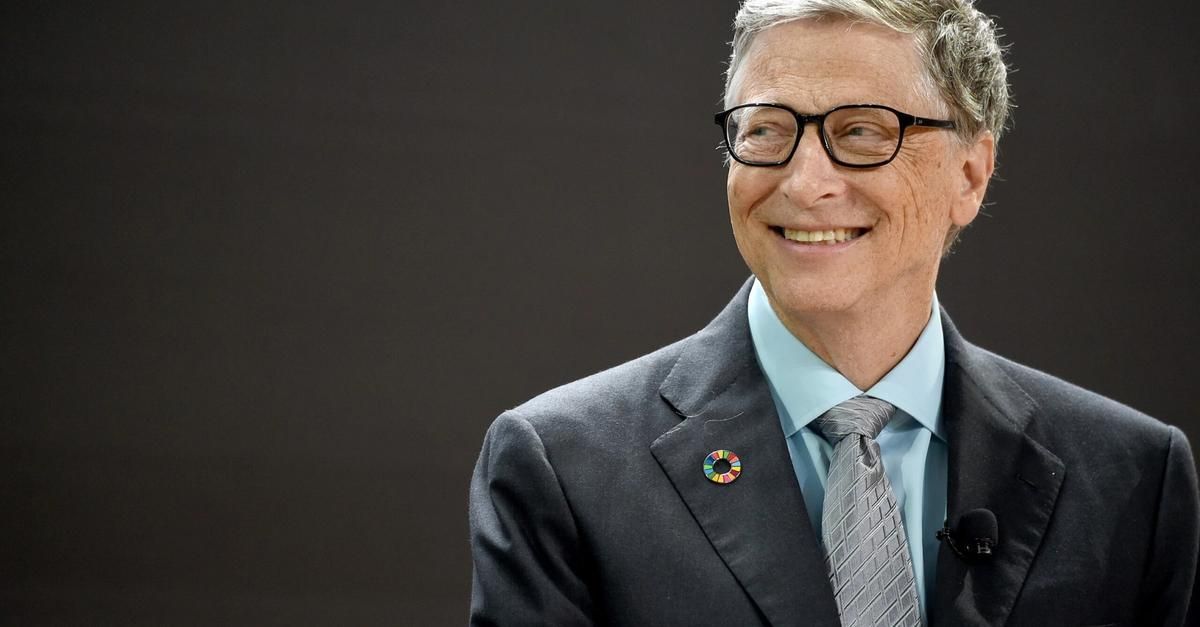

Microsoft co-founder Bill Gates has issued a startling forecast for the global workforce, predicting that artificial intelligence will be capable of replacing doctors, teachers, and mental health professionals within the next ten years. Speaking recently on The Tonight Show Starring Jimmy Fallon, the 70-year-old billionaire philanthropist argued that we are entering an era of "free intelligence," where high-level human expertise—currently a rare and expensive commodity—will become universally accessible and virtually cost-free through AI.
According to Gates, the rapid advancement of generative AI is bridging the gap between simple automation and specialized human skill. He envisions a world where "great medical advice and great tutoring" are available to anyone with an internet connection, effectively solving systemic shortages in healthcare and education. "The era that we’re just starting is that intelligence is rare," Gates explained, "and with AI, over the next decade, that will become free and commonplace."
The transition is expected to be most profound in the medical field. Gates believes AI won't just assist doctors but will eventually take over the primary roles of diagnosis and treatment planning. By analyzing massive biological datasets and patient histories at speeds impossible for humans, AI "medical advisers" could provide localized care in regions currently suffering from a lack of trained practitioners. This shift, while promising for global health equity, raises urgent questions about the future of the medical profession and the "human touch" in clinical care.
In the realm of education, Gates predicts that AI tutors will become "as good as any human teacher." These systems will offer personalized learning plans that adapt to a student's specific pace, interests, and comprehension levels. This "agentic" approach to learning could render the traditional classroom model obsolete, as AI-driven platforms provide immediate feedback and deeper research capabilities than a single educator managing a room of thirty students.
However, Gates admitted that the speed of this evolution is "very profound and even a little bit scary," noting that there appears to be "no upper bound" to what these models can achieve. His vision of a future where humans aren't needed "for most things" has sparked intense debate among labor experts. While Microsoft AI CEO Mustafa Suleyman supports the idea that AI is fundamentally "labor replacing," others argue that complex roles involving emotional intelligence and physical intervention, such as surgery or early-childhood social development, will remain beyond AI's reach.
Despite the looming displacement of traditional jobs, Gates remains optimistic about the societal shift. He suggested that as AI solves the problems of "making things, moving things, and growing food," humans might move toward a two- or three-day work week. He believes this productivity boom will free society to focus on creative endeavors and activities that we "reserve for ourselves," such as professional sports and the arts. "We won't want to watch computers play baseball," he quipped, emphasizing that human-to-human connection will still hold value.
As the decade progresses, Gates is urging young innovators to lean into the AI revolution rather than resist it. He noted that if he were starting a company today, it would be "AI-centric" from day one. While the geopolitical and economic implications of "free intelligence" are still being mapped out, Gates' message is clear: the most important professions of the last century are about to undergo their most radical transformation in human history.
NEVER MISS A THING!
Subscribe and get freshly baked articles. Join the community!
Join the newsletter to receive the latest updates in your inbox.