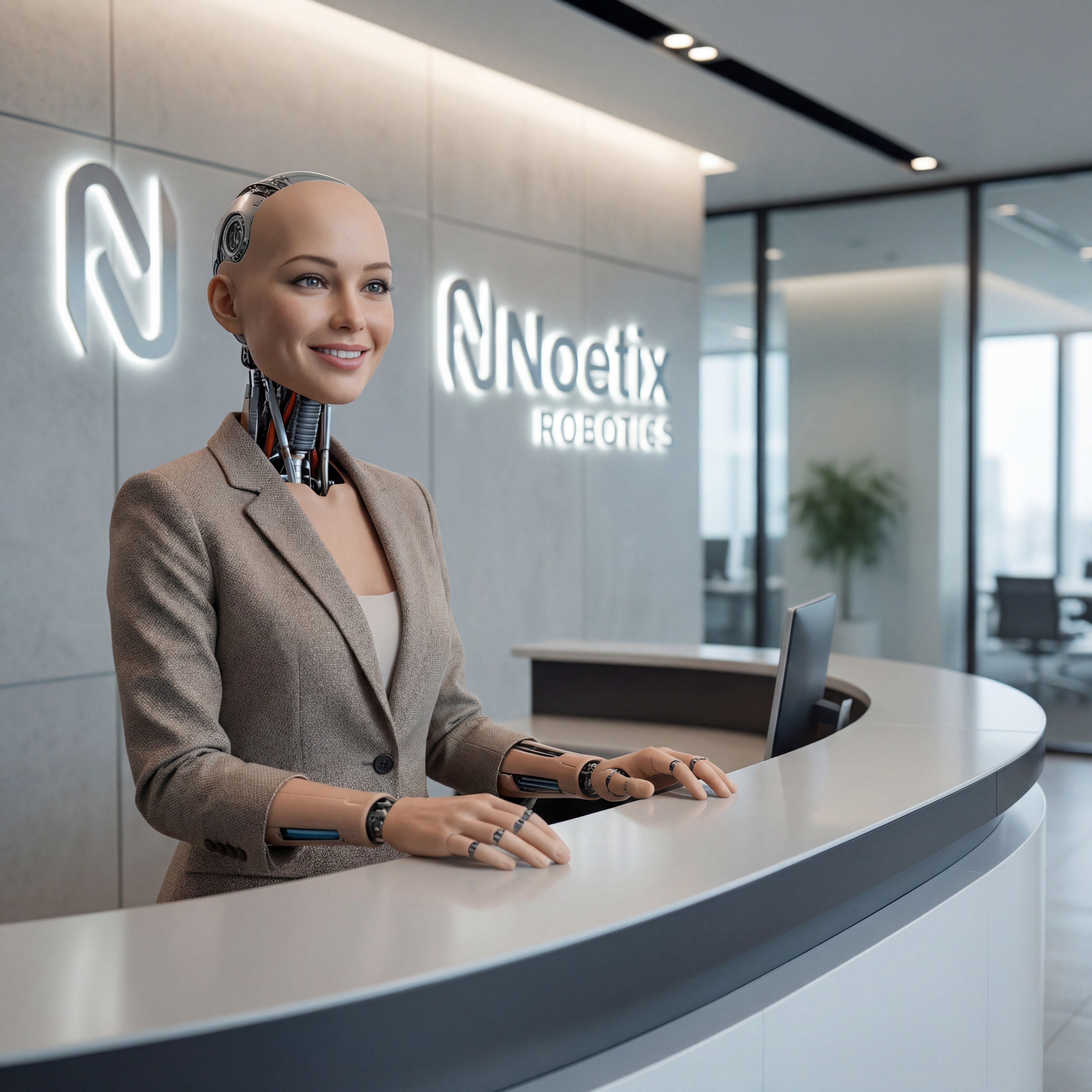

Noetix Robotics has officially launched the Hobbs W1, a hyper-realistic humanoid receptionist designed to automate front-desk hospitality. Unlike industrial robots built for heavy lifting, the Hobbs W1 is engineered for "emotional intelligence," featuring a bionic head capable of mimicking over 30 distinct human facial expressions in real-time. This development marks a significant milestone in China's push to move humanoid technology out of the lab and into the public eye.
The centerpiece of the Hobbs W1 is its exceptionally lifelike face, which utilizes a complex network of internal actuators to replicate subtle micro-expressions. The robot can smile, frown, and maintain "natural" eye contact, avoiding the rigid, vacant stares often associated with previous generations of androids. By synchronizing these facial movements with its speech, Noetix aims to create a sense of genuine presence that makes the "first impression" of a business feel more hospitable and less mechanical.
Beyond its striking appearance, the Hobbs W1 serves as a high-capacity administrative hub. Powered by a proprietary multimodal Large Language Model (LLM), the robot can process both voice and visual cues simultaneously. This allows it to identify returning executives via facial recognition, manage guest check-ins by scanning QR codes, and answer complex questions about building layouts or company history. The robot’s dual-GPU onboard processing ensures that these interactions happen with ultra-low latency, mimicking the pace of a human conversation.
The physical design of the Hobbs W1 is a hybrid of bionic realism and practical utility. While the head is hyper-lifelike, the body is mounted on a mobile, wheeled base for efficient navigation through office lobbies and hotel foyers. It is equipped with two robotic arms and 6-DoF (degrees of freedom) dexterous hands, enabling it to perform light tasks such as handing over visitor badges, pressing elevator buttons, or pointing guests toward specific meeting rooms. An interactive screen on its chest provides additional visual information for those who prefer touch-based navigation.
A key factor in the robot’s development is Noetix's "product-first" engineering philosophy. By vertically integrating its supply chain and utilizing domestic manufacturing in China, the company has managed to maintain a competitive price point while pushing the boundaries of realism. This strategy follows the success of their smaller "Bumi" home robot, which recently broke price barriers for consumer humanoids, signaling that Noetix is ready to scale these "socially aware" machines across global corporate environments.
For businesses, the appeal of the Hobbs W1 lies in its ability to provide 24/7 consistent service without the fatigue or emotional burnout common in high-traffic reception roles. The robot can handle repetitive logistical tasks with 100% accuracy while maintaining a friendly, programmed demeanor. Noetix maintains that the goal is not to replace human hospitality but to augment it—allowing human staff to focus on high-value, empathetic problem-solving while the robot manages the high-volume logistics of guest entry.
As the Hobbs W1 enters pilot programs in major tech hubs, the robotics industry is watching to see how the public reacts to a machine that looks and speaks so much like a person. If successful, the Noetix receptionist could redefine the future of the workspace, turning the "Uncanny Valley" from a psychological hurdle into a bridge for more intuitive human-AI collaboration. The launch confirms that in 2025, the face of AI is no longer just a screen, but a lifelike companion capable of looking you in the eye.
NEVER MISS A THING!
Subscribe and get freshly baked articles. Join the community!
Join the newsletter to receive the latest updates in your inbox.