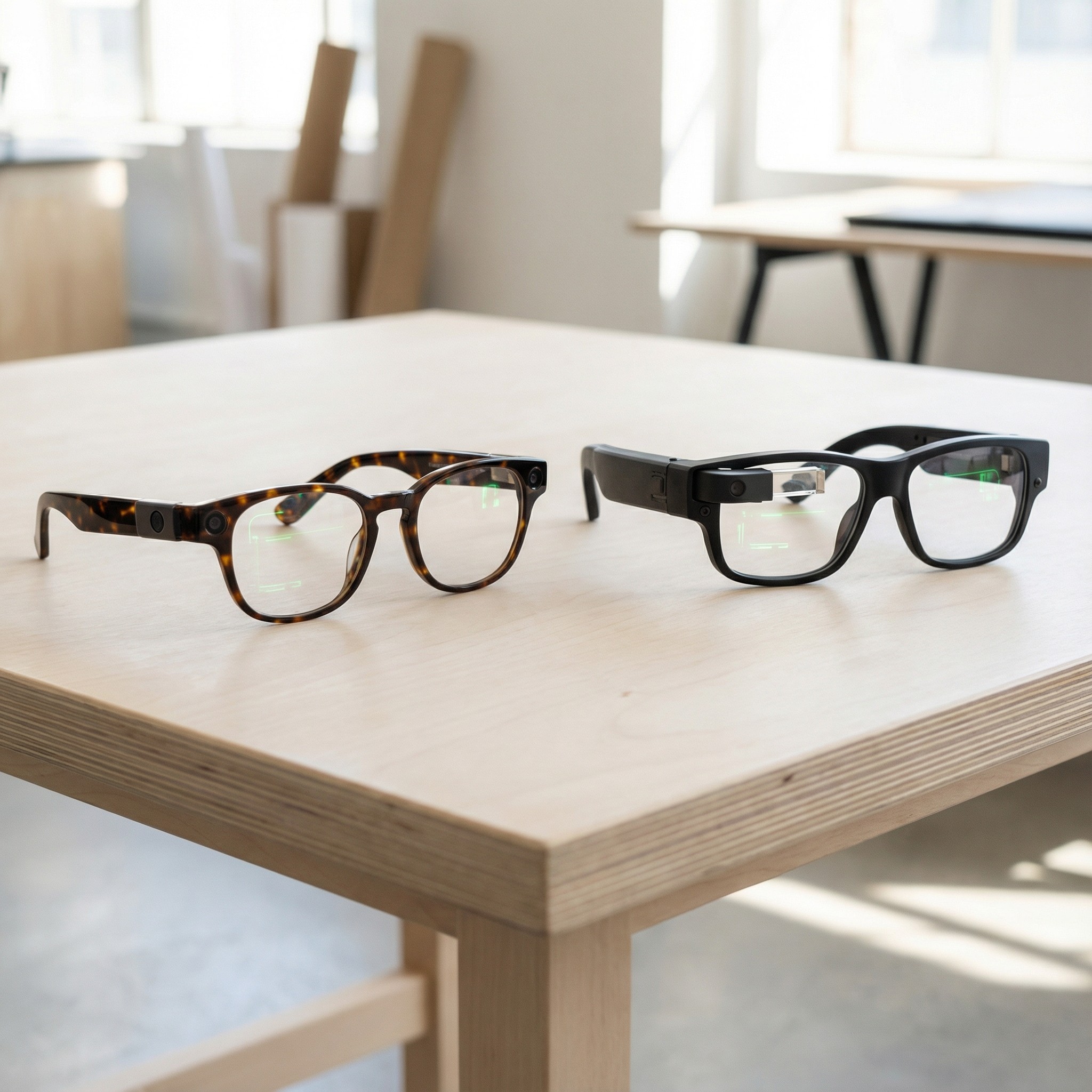

Google has officially set a 2026 timeline for the launch of its first next-generation AI-powered smart glasses, signaling a major strategic return to the consumer wearable market. Moving well beyond the singular approach of the original Google Glass, the company has revealed a dual-product strategy built entirely around its multimodal Gemini AI and the new Android XR operating system, positioning itself to aggressively challenge rivals like Meta and Apple in the emerging AI hardware race.
Two Paths to AI Wearables: Screen-Free and Display
Google's strategy is designed to appeal to different user needs by developing two distinct categories of glasses, both scheduled to arrive in 2026. The first is the "AI Glasses" model, which is designed for screen-free assistance. These highly lightweight glasses will rely on built-in speakers, microphones, and cameras to enable natural, conversational interaction with Gemini. They are intended for hands-free tasks, such as taking photos, answering real-time questions about the surroundings, and providing audio-led, contextual help—a direct competitor to Meta's Ray-Ban smart glasses.
The second category is the "Display AI Glasses." These will incorporate a discreet, in-lens screen, providing a private display that overlays useful information directly into the user's line of sight. Use cases demonstrated include turn-by-turn navigation, real-time translation captions, and notifications. By offering both a minimalist, audio-first model and a more visually augmented option, Google aims to give consumers the choice between a lightweight, all-day conversational assistant and one that integrates heads-up visual guidance.
Strategic Partnerships to Prioritize Style
Crucially, Google has learned from the social stigma that plagued the original Google Glass and is leaning heavily on design expertise. The company confirmed that its first AI glasses will be developed in collaboration with fashion-forward eyewear partners, including Warby Parker and Gentle Monster, in addition to its deep technical partnership with Samsung Electronics on the core Android XR platform. This emphasis on style and conventional form factor is vital, as the goal is to create devices that are comfortable enough to be worn all day and blend seamlessly into everyday life.
Leveraging the Power of the Android Ecosystem
To keep the glasses slim and lightweight, Google is utilizing a clever processing strategy: the new glasses will connect wirelessly to a smartphone, offloading the most complex AI computations to the user’s phone. The entire experience will run on Android XR, Google’s unified platform for extended reality. The company has already released an SDK (Software Development Kit) preview for developers, encouraging them to build specialized augmented experiences, such as integrated apps for services like Uber and GetYourGuide, which will utilize the glasses’ cameras and contextual AI.
The 2026 launch signifies a calculated, refined effort by Google to establish a commanding presence in the future of ambient computing. By addressing the previous failures of Google Glass through sophisticated multimodal AI, a dual-device strategy, and key design partnerships, Google is hoping to define a new, more acceptable category of consumer AR. The battleground for the next generation of computing is officially moving from the phone screen to the lens of a pair of everyday glasses.
NEVER MISS A THING!
Subscribe and get freshly baked articles. Join the community!
Join the newsletter to receive the latest updates in your inbox.