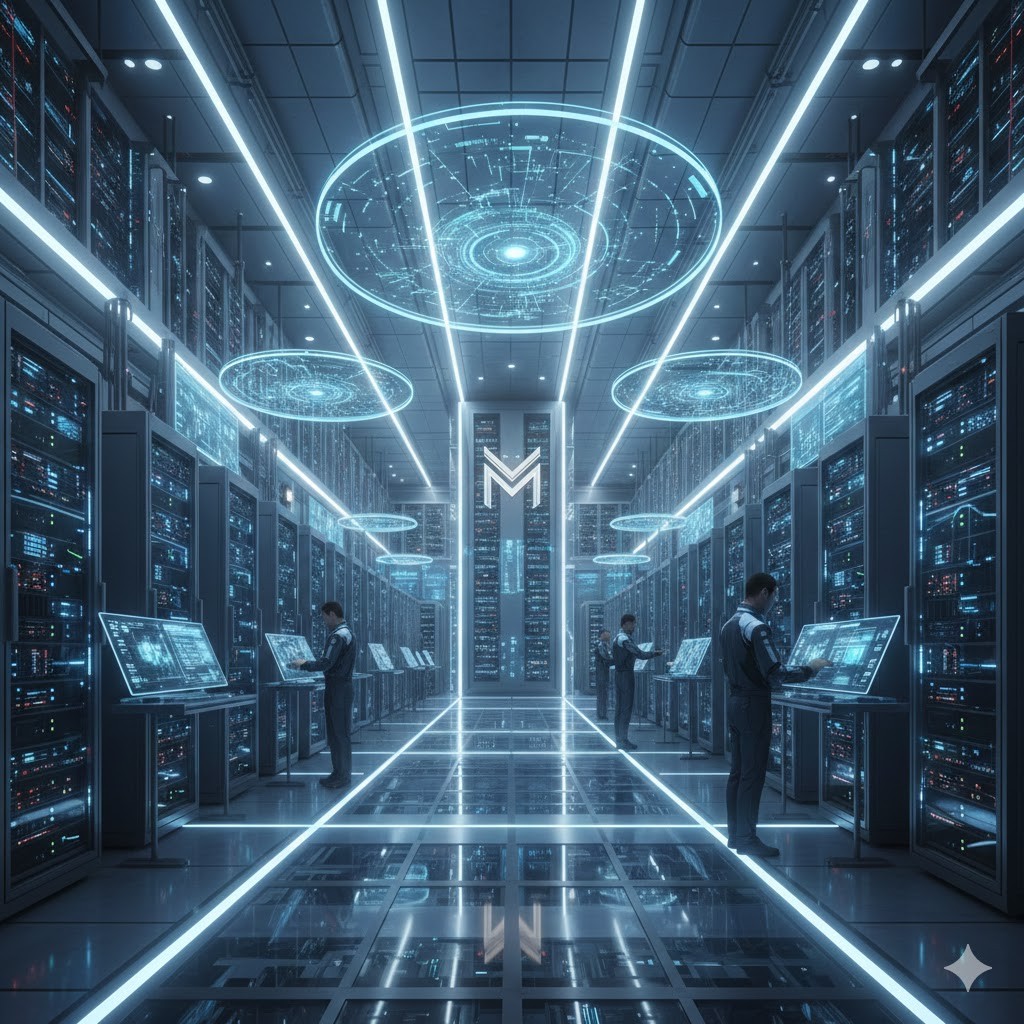

Meta Platforms has officially launched its ambitious "Meta Compute" initiative, a top-level organizational project designed to accelerate the development of the company’s foundational AI infrastructure. Announced on January 12, 2026, by CEO Mark Zuckerberg via Threads, this undertaking signals Meta's commitment to building the vast hardware and energy backbone required to power what he terms "personal superintelligence." The initiative's immediate goal is to establish tens of gigawatts of power capacity within the current decade, with long-term plans to scale to hundreds of gigawatts as AI capabilities evolve.
To spearhead this colossal endeavor, Meta has assembled a leadership trio of seasoned executives. Santosh Janardhan, who has previously overseen Meta's technical infrastructure and data centers, will focus on the engineering and operational aspects of building and running these next-generation AI facilities. He is joined by Daniel Gross, a prominent figure in AI strategy and venture capital, who will lead the critical areas of capacity strategy, supply chain management, and external partnerships. This dual leadership underscores the initiative’s blend of engineering prowess and forward-thinking strategic resource acquisition.
Adding a crucial layer of expertise, Dina Powell McCormick, a former senior government official and global investment banker, will oversee government relations and policy for Meta Compute. Her role will be pivotal in navigating the complex regulatory landscapes associated with securing vast land, energy, and resources for infrastructure projects of this magnitude, which often rival the scale of small national grids. This leadership structure emphasizes that Meta views AI infrastructure not just as a technical challenge, but as a significant geopolitical and economic undertaking.
The launch of Meta Compute follows a period of aggressive capital expenditure by the company, which invested an estimated $72 billion in 2025 alone, primarily in its AI and metaverse divisions. A significant portion of this investment has gone into acquiring and deploying cutting-edge AI chips, liquid cooling systems, and advanced networking hardware. Meta Compute will centralize the architectural and strategic planning for these components, ensuring a cohesive and optimized approach to building what Zuckerberg describes as a "truly global AI infrastructure."
A cornerstone of the Meta Compute strategy is securing unprecedented amounts of clean energy. Just days prior to this announcement, Meta revealed it had signed multi-gigawatt nuclear power agreements with Oklo, TerraPower, and Vistra, collectively securing 6.6 gigawatts of firm, carbon-free power. These deals highlight the company's recognition that the immense computational demands of future AI models—especially those required for "personal superintelligence"—will necessitate sustainable and highly reliable energy sources on a scale previously associated only with nation-states.
The vision of "personal superintelligence" articulated by Zuckerberg entails an AI that is tailored to each individual, capable of understanding their unique context, preferences, and goals, and acting as a hyper-efficient assistant across all digital and potentially physical domains. To achieve this, Meta anticipates needing not just powerful data centers, but a global network of specialized AI compute facilities that are geographically distributed for low latency and high resilience, making the "hundreds of gigawatts" target a necessity rather than an aspiration.
In essence, Meta Compute represents a profound strategic pivot, signaling that Meta sees its future not just in software and social platforms, but as a foundational infrastructure provider for the coming age of artificial general intelligence. By taking control of every layer of the AI stack, from silicon to power generation, Meta aims to build a competitive moat that ensures its long-term dominance in a technology race that will redefine human-computer interaction and potentially, human capabilities themselves.
NEVER MISS A THING!
Subscribe and get freshly baked articles. Join the community!
Join the newsletter to receive the latest updates in your inbox.