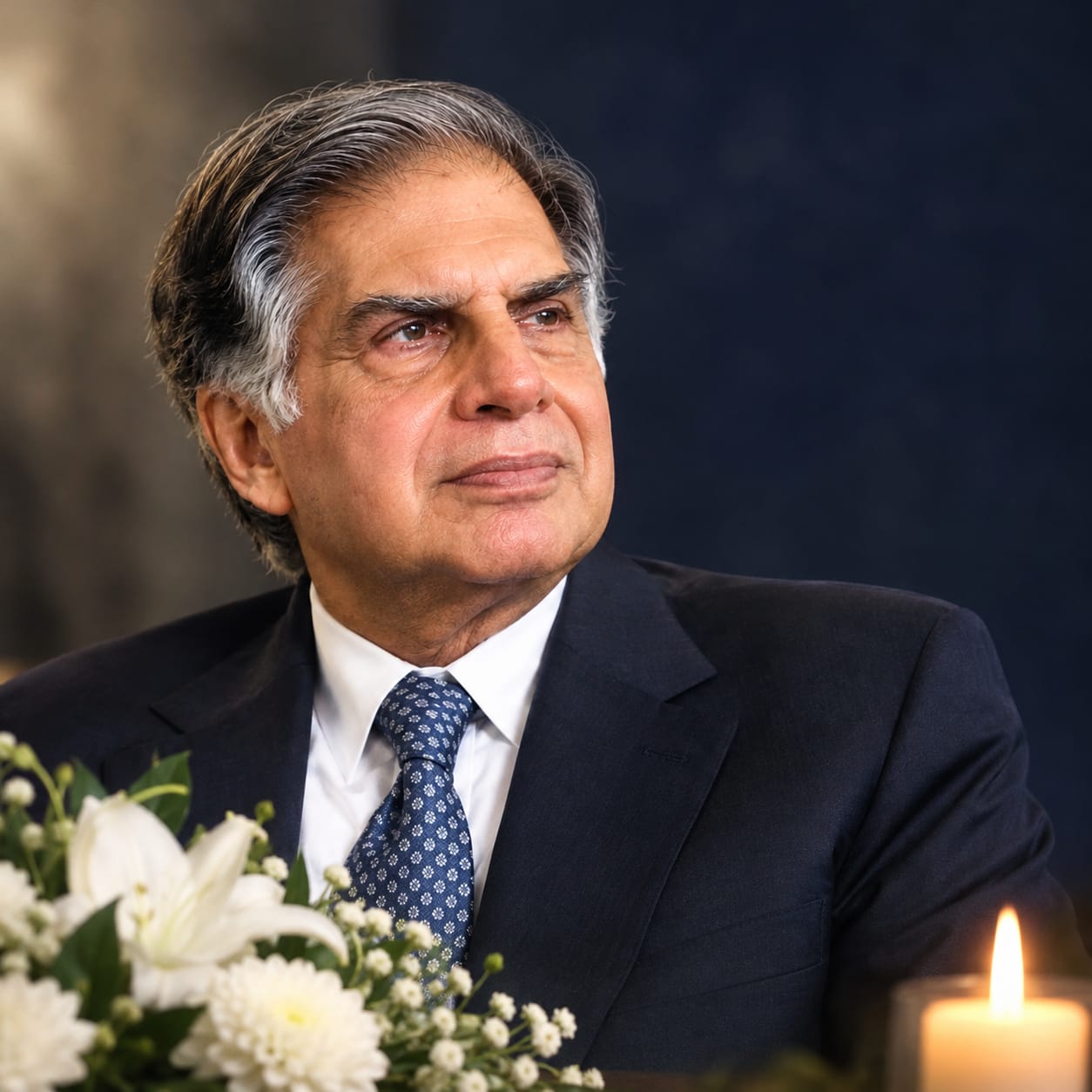

As the world marks the second solemn anniversary of the passing of Ratan Naval Tata, the profound void he left behind continues to be measured not merely by the monumental scale of the business empire he directed, but by the extraordinary depths of humanity he infused into modern commerce. Today, across boardrooms, university campuses, and quiet village squares alike, millions pause to remember a leader whose life was an enduring masterclass in grace, ethical fortitude, and unyielding civic duty. Two years since his departure, the collective memory of his quiet dignity serves as a reassuring anchor in a fast-paced world often dominated by ruthless ambition and fleeting trends.
His journey began decades before he stepped into the global spotlight, forged through a rigorous, self-effacing upbringing that valued quiet competence over inherited privilege. When he first walked onto the shop floors of Tata Steel in Jamshedpur as a young engineering graduate, shoveling limestone alongside floor-level workers, he was unknowingly laying the psychological and experiential bedrock for a leadership style that would resonate across generations. That formative period instilled in him a permanent empathy for the working class, ensuring that every strategic pivot he later orchestrated as chairman was tempered by a deep awareness of how corporate decisions affected ordinary human lives.
When he assumed the leadership of the Tata Group in 1991 during the dawn of India's economic liberalization, he faced the daunting task of transforming a traditional, loosely knit conglomerate into a globally competitive enterprise. Skeptics frequently questioned whether his gentle demeanor and soft-spoken cadence possessed the necessary steel to navigate turbulent international markets and fierce domestic competition. Yet, beneath that calm exterior lay a resolute visionary who swiftly centralized group governance, restructured disparate operations, and steered the historic institution toward unprecedented international horizons.
His bold strategic vision culminated in landmark cross-border acquisitions that redefined how the world perceived Indian enterprise, bringing iconic global names such as Tetley, Corus, and Jaguar Land Rover under the Tata umbrella. Rather than pursuing empire for the sake of prestige, each acquisition was executed with meticulous foresight to secure advanced technology, expand global market reach, and ensure long-term resilience for the conglomerate. Through these daring leaps, he proved that enterprises originating from the developing world could successfully integrate, revitalize, and lead historic Western institutions without ever compromising their core cultural identity.
Yet, for all his ambitions on the global stage, his heart remained steadfastly attuned to the socio-economic upliftment of the common citizen, driving him to pioneer initiatives that defied conventional commercial calculations. Recognizing that millions of families faced daily hazards riding on overcrowded two-wheelers during torrential monsoon rains, he dreamed of engineering a safe, affordable, four-wheel family transport option. This profound empathy gave birth to the Tata Nano, a marvel of frugal engineering and design innovation intended to bring the dignity of car ownership within reach of ordinary households.
Though market dynamics, shifting consumer aspirations, and logistical roadblocks ultimately cut the vehicle's commercial life short, the philosophical undertaking behind it stood as a monumental testament to his user-centric courage. He firmly believed that true leadership required the willingness to embrace noble failures rather than playing it safe in the comfort zone of conventional profitability, famously noting that anyone who never made a mistake had never attempted anything truly new. That fearless spirit of experimentation continues to inspire countless modern innovators across the startup ecosystem to build solutions addressing real societal needs.
Beyond commercial metrics, his most revolutionary contribution was his unwavering insistence that corporate wealth must serve as an engine for collective societal welfare rather than private accumulation. Two-thirds of the equity of Tata Sons is held by philanthropic trusts that continuously fund education, healthcare, rural infrastructure, and artistic heritage across India, touching hundreds of millions of lives invisibly. He governed these charitable endowments with the exact same strategic rigor and meticulous oversight that he applied to commercial ventures, ensuring that the fruits of industrial labor flowed back to nourish the nation.
His personal compassion extended outward to the most vulnerable corners of society, encompassing stray animals and victims of sudden tragedies with equal tenderness. Long before animal welfare became a mainstream social conversation, he championed the creation of advanced veterinary care facilities within the Tata ecosystem to ensure that stray and abandoned animals received compassionate treatment and dignity. This deep-seated empathy was starkly demonstrated following the harrowing 2008 terrorist attacks in Mumbai, when he personally visited every affected employee and family associated with the Taj Mahal Palace Hotel, establishing comprehensive lifelong support systems for them.
In his post-retirement years, he transformed into an enthusiastic mentor and angel investor, pouring his time, wisdom, and capital into fledgling startups spanning artificial intelligence, e-commerce, and clean energy. He viewed the energy and ambition of India's youth as the ultimate guarantor of a brighter future, patient in his counsel and endlessly curious about disruptive technologies that could solve complex environmental and social puzzles. Young entrepreneurs often spoke of how his gentle encouragement and validating presence gave them the courage to pursue audacious dreams against daunting odds.
The simplicity with which he lived his life consistently astonished observers accustomed to the lavish lifestyles typical of global billionaires, as he preferred modest living quarters, self-driven cars, and commercial air travel. His humility was entirely authentic, rooted in the philosophical conviction that leadership was a temporary stewardship rather than an entitlement, and that true stature is measured by how one treats those who can offer nothing in return. When the time came to step down from executive responsibilities, he managed the complex succession process with immaculate grace, ensuring institutional strength and harmony without seeking personal credit.
The global outpouring of grief on the day of his passing two years ago underscored the rare nature of his bond with humanity, transcending financial achievements to touch the emotional core of society. Tributes flowed in a continuous stream from global heads of state, rival business leaders, and ordinary citizens who felt they had lost a moral guardian and an ethical north star. People shared cherished memories of his handwritten thank-you notes, his quiet acts of kindness, and his steadfast defense of progressive, humane values in an increasingly cynical world.
Today, as we reflect on his legacy on this second anniversary, his life offers a timeless reminder that profitability and compassion are not contradictory forces, but essential partners in sustainable enterprise. He demonstrated conclusively that a corporation can scale global heights while retaining its soul, and that true power is most potent when wielded with supreme gentleness and humility. The institutions he fortified continue to operate on the bedrock of trust, integrity, and community welfare, serving as living monuments to his enduring philosophy of nation-building.
In honoring his memory, society is reminded that history is ultimately shaped not by the magnitude of financial capital accumulated, but by the depth of character displayed during moments of intense pressure and choice. He left behind an invaluable blueprint for how privilege and influence can be transformed into a vehicle for universal upliftment, proving that integrity is the ultimate competitive advantage. His journey from an observant, quiet young engineer to the undisputed moral conscience of Indian industry remains an inspiring epic of vision, courage, and grace.
The ongoing relevance of his teachings is visible in every young entrepreneur who chooses ethical governance over shortcuts, and in every corporate leader who prioritizes employee welfare above short-term gains. His life dismantled the cynical myth that nice guys finish last, proving instead that enduring legacy belongs exclusively to those who earn the deep, unforced trust of the people they serve. As organizations and individuals strive to navigate the complexities of the modern era, his standards remain the benchmark against which true leadership is measured.
Long after monuments weather and business landscapes evolve, the values championed by Ratan Naval Tata—courage under pressure, unbending honesty, and an endless capacity for empathy—will continue to guide humanity toward a more compassionate and equitable future. He taught generations that a life well-lived is measured by the lives touched and the hearts healed, securing his place as an immortal figure in human history. On this second anniversary of his passing, the flame of his inspiration burns as brightly as ever, reminding us all of what is possible when brilliance is matched by a pure heart.
NEVER MISS A THING!
Subscribe and get freshly baked articles. Join the community!
Join the newsletter to receive the latest updates in your inbox.