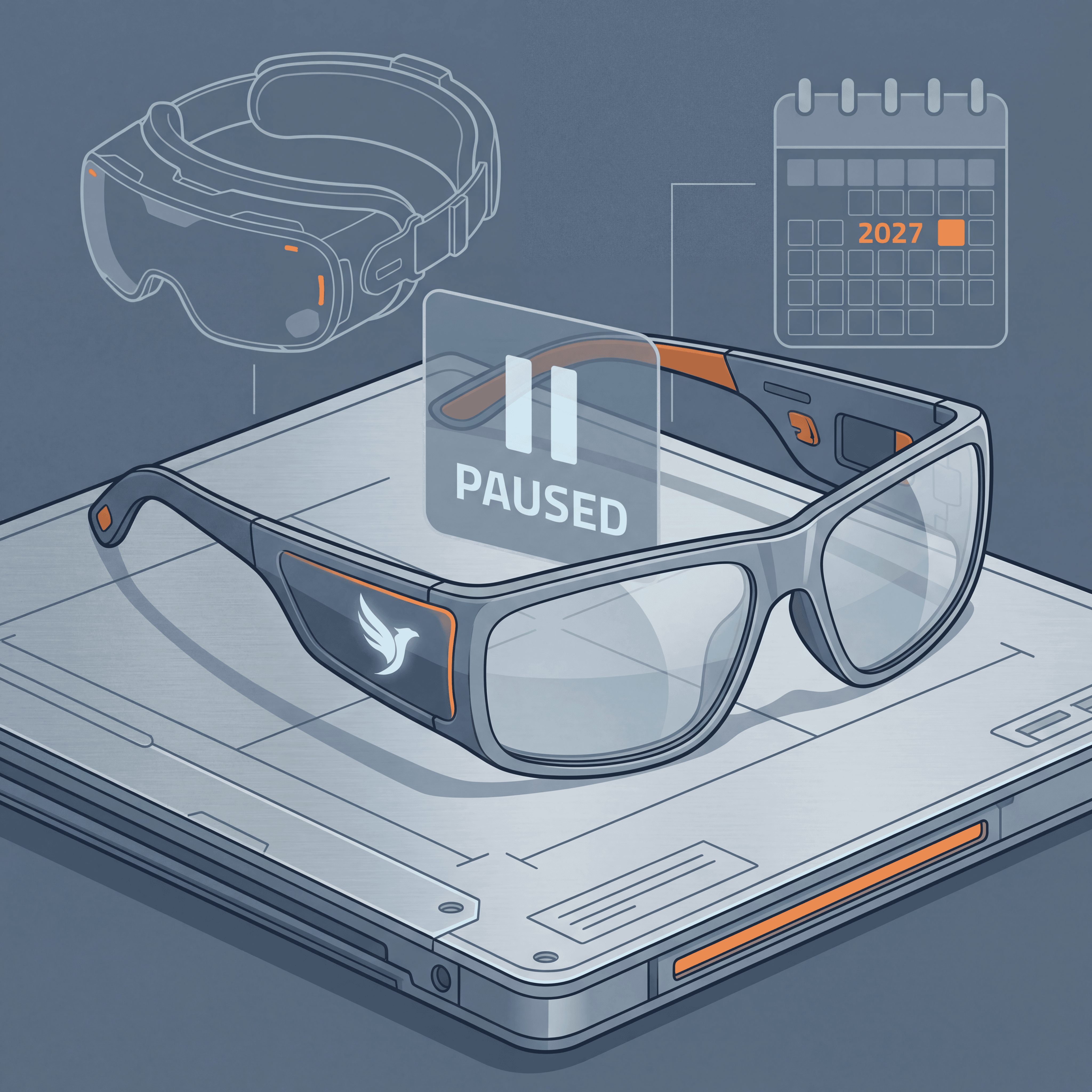

Meta Platforms has reportedly delayed the release of its next-generation, high-end mixed reality glasses, code-named "Phoenix," pushing the launch window back to 2027. Citing internal memos, the postponement from its initially planned late-2026 debut is attributed to the company prioritizing a "fully polished and reliable experience" amid high-stakes competition and internal budget pressures.
The glasses, which are distinct from the current Ray-Ban Meta smart glasses line and the heavier Quest VR headsets, represent a critical device in Meta's long-term push into the metaverse and spatial computing.
Seeking 'Breathing Room' for Quality
According to internal communications from executives in the Reality Labs division, the decision to delay the release until the first half of 2027 was made after feedback from CEO Mark Zuckerberg focused on the need to make the business "sustainable" and deliver "experiences with higher quality."
Reality Labs Vice Presidents Gabriel Aul and Ryan Cairns reportedly wrote in a memo that the extended timeline is "going to give us a lot more breathing room to get the details right," adding, "There's a lot coming in hot with tight bring-up schedules and big changes to our core UX, and we won't compromise on landing a fully polished and reliable experience."
This emphasis on refinement over speed suggests Meta is highly conscious of the technical and experiential hurdles involved in launching a complex mixed reality device, especially one that will inevitably be compared to Apple's premium Vision Pro headset.
The ‘Phoenix’ Glasses: Key Details
While Meta has not officially disclosed details, reports suggest the Phoenix glasses (previously code-named "Puffin") will have a goggle-like form factor similar to the Vision Pro, but will aim to be significantly lighter, potentially weighing around 100 grams.
To achieve this lightweight design, the device is expected to use a "compute puck," an external, tethered module that handles the bulk of the processing and battery load.
However, the glasses are rumored to feature lower-resolution displays and weaker computing performance compared to higher-end rivals, indicating they may target a different market segment that prioritizes comfort and all-day wearability over pure graphical power.
The Broader Shift in Reality Labs
The delay of Phoenix arrives during a period of strategic change and fiscal tightening within Meta's Reality Labs (RL) unit, which has accumulated tens of billions of dollars in operating losses.
Budget Cuts: The company is reportedly eyeing budget cuts of up to 30% for its metaverse initiative, shifting some resources toward AI glasses and wearables.
New Products: The roadmap is not entirely frozen. Sources suggest Meta still plans to release a "limited edition" wearable device code-named "Malibu 2" in 2026, as well as working on a next-generation Quest 4 headset focused on immersive gaming and improving unit economics.
The postponement of the Phoenix glasses underscores the challenges in developing consumer-ready, lightweight mixed reality technology and highlights Meta's move to prioritize stability and user experience quality over aggressive launch timelines.
NEVER MISS A THING!
Subscribe and get freshly baked articles. Join the community!
Join the newsletter to receive the latest updates in your inbox.