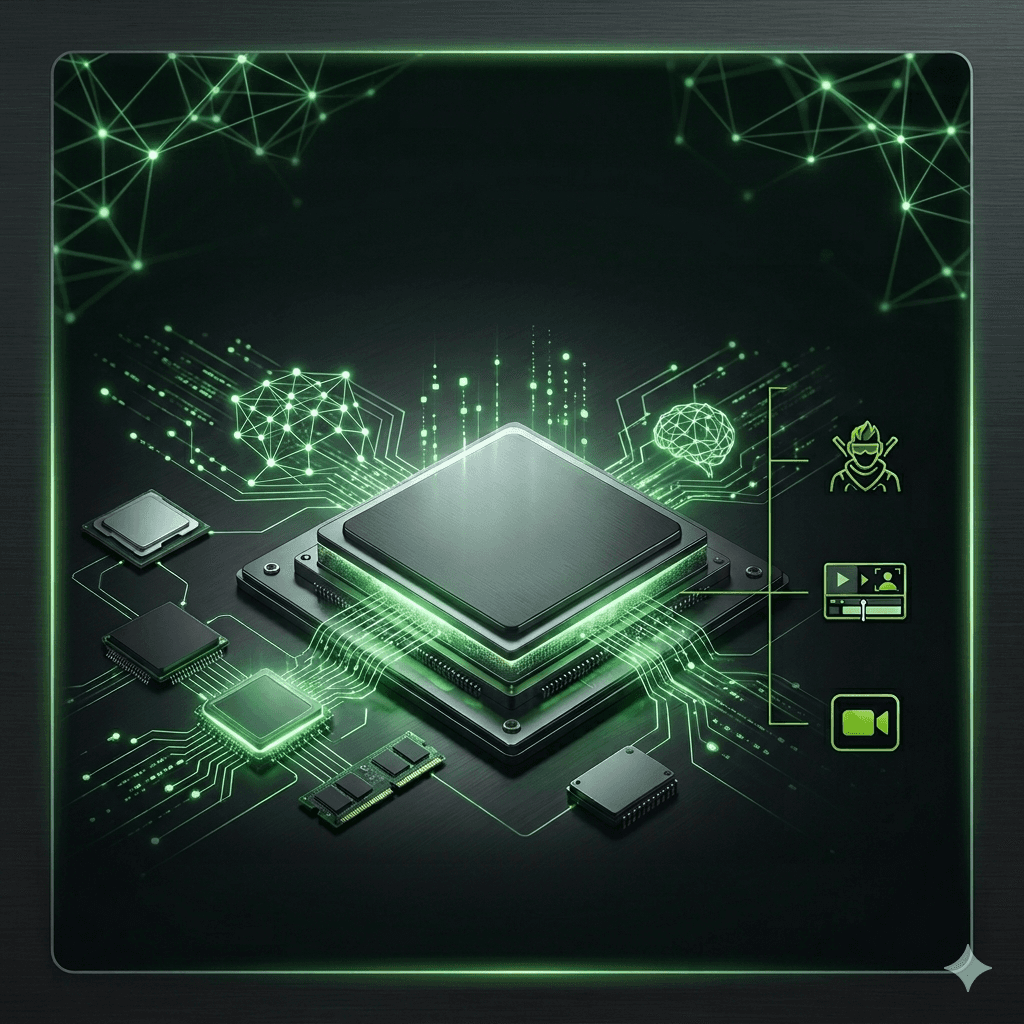

In a monumental shift that aims to transition the personal computer from a basic productivity tool to an autonomous digital teammate, Nvidia has officially unveiled its new consumer "superchip," the Nvidia RTX Spark™. Announced by CEO Jensen Huang during his keynote speech at the Computex conference in Taipei, this breakthrough silicon marks Nvidia’s aggressive expansion into the general consumer market. Developed over three years in a deep, strategic collaboration with Microsoft, the chip is designed to power a brand-new class of Windows-based personal computers purpose-built to run advanced artificial intelligence locally.
The introduction of the RTX Spark represents what industry analysts are calling an inflection point for consumer hardware, comparable to the advent of the smartphone. For the last forty years, human-computer interaction has relied almost entirely on launching applications via manual keyboard and mouse inputs. Nvidia’s new architecture aims to change that fundamental dynamic completely. By moving the computational heavy lifting of massive artificial intelligence models from remote cloud data centers directly onto local device silicon, users will be able to deploy persistent, secure AI agents that navigate workflows and execute complex tasks seamlessly across multiple apps on command.
Under the hood, the RTX Spark superchip is an absolute powerhouse of integrated technology. Built on TSMC's cutting-edge 3-nanometer manufacturing process, it seamlessly fuses a custom Arm-based, 20-core Nvidia Grace CPU—designed in partnership with MediaTek—with an elite Nvidia Blackwell architecture GPU featuring 6,144 CUDA cores. The superchip leverages Nvidia's high-speed NVLink-C2C interconnect, pairing the processors with up to an astonishing 128GB of unified LPDDR5X memory. This unique layout allows the CPU and GPU to share a massive pool of RAM instantly, pushing out a staggering 1 petaflop of local AI computing performance.
What this massive processing capability means for the end-user is a level of uncompromised on-device performance never before seen in a consumer machine. PCs equipped with the RTX Spark will be capable of locally running 120-billion-parameter large language models (LLMs) with massive 1-million-token context windows. For digital creators, developers, and power users, the chip easily tackles rendering ultra-large 90GB+ 3D scenes, editing 12K video, or generating 4K AI videos directly on a laptop. Crucially, standard consumer features aren't sacrificed for AI power; gamers can expect native Arm-supported AAA gaming at 1440p resolution at well over 100 frames per second.
Nvidia and Microsoft have also worked carefully to address the growing security and privacy anxieties surrounding autonomous AI agents. Because these agents require deep integration to semantically search local files and bridge cross-app tasks, running them in the cloud poses immense data liabilities. To build digital trust, the new RTX Spark ecosystem introduces a native Windows runtime called Nvidia OpenShell alongside new operating system security primitives. This software framework allows users to establish strict, local policy boundaries, dictating precisely what private data an agent can access and ensuring sensitive information never leaves the local device.
The broader tech ecosystem is already aggressively pivoting to support Nvidia's new consumer hardware initiative. Software giant Adobe has announced it is rearchitecting cornerstone applications like Photoshop and Premiere Pro from the ground up to natively tap into the superchip's unified memory, doubling AI-assisted editing performance for tools like Generative Fill. Over 100 other major developers—including Blender, CapCut, Blackmagic Design, and Remedy Entertainment—have committed to optimizing their software stacks for the new Arm-based Windows ecosystem.
Consumers won't have to wait long to experience the paradigm shift firsthand. Because the superchip boasts world-class power efficiency alongside its processing power, manufacturers are able to package it inside premium, ultra-thin aluminum chassis that measure as thin as 14 millimeters and weigh just three pounds. A wave of sleek RTX Spark-powered laptops and compact desktop mini-PCs—boasting all-day battery life and stunning displays—will hit shelves this fall from leading global computer manufacturers, including Asus, Dell, HP, Lenovo, MSI, and Microsoft Surface.
NEVER MISS A THING!
Subscribe and get freshly baked articles. Join the community!
Join the newsletter to receive the latest updates in your inbox.