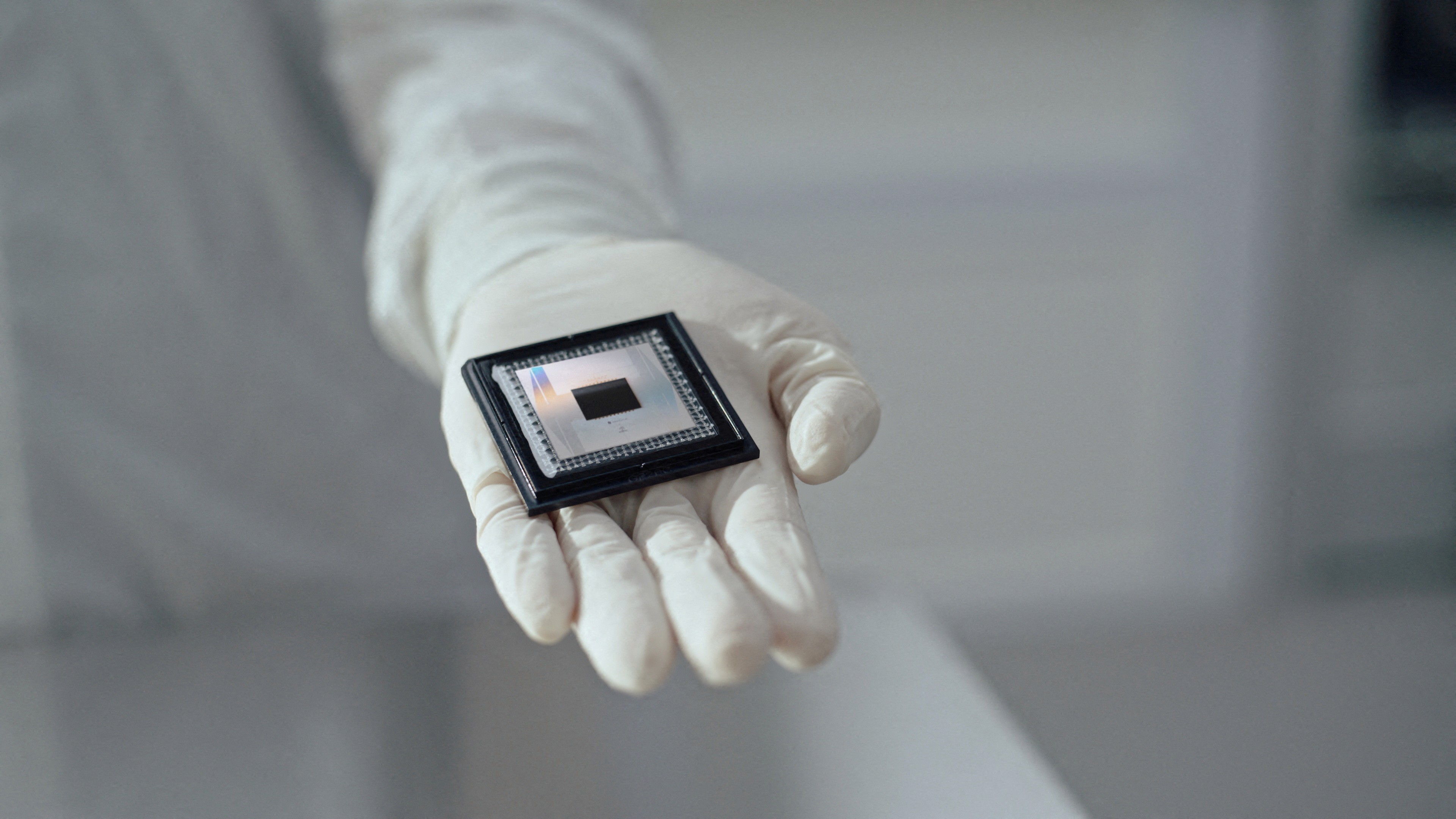

In a move set to redefine the global landscape of high-performance computing, Google has officially opened access to its state-of-the-art Willow quantum processor for researchers across the United Kingdom. Announced in December 2025 as part of a landmark partnership with the UK’s National Quantum Computing Centre (NQCC), the initiative provides British scientists with a rare opportunity to experiment on one of the world's most advanced pieces of hardware. This "silicon diplomacy" is designed to transition quantum technology from a laboratory curiosity into a practical tool for solving humanity's most complex challenges, from drug discovery to climate modeling.
The Willow processor, unveiled in late 2024, represents a historic technical milestone as the first chip to achieve "below-threshold" quantum error correction. This 105-qubit superconducting processor solves a fundamental problem that has plagued the field for three decades: as quantum arrays scale up, errors typically increase. Willow proves the opposite is possible, showing that adding more qubits can actually reduce the error rate exponentially. In benchmark tests, Willow completed a computation in under five minutes that would have taken the world’s fastest classical supercomputers a staggering 10 septillion years to finish.
UK Science Minister Lord Patrick Vallance hailed the agreement as a vital step in maintaining Britain’s position as a global leader in innovation. By allowing UK researchers to compete for processor time through an open competition—with proposals due by January 31, 2026—the government aims to bolster the nation's efforts in "putting quantum to work." Successful applicants will not only gain access to the hardware but will also receive research grants and direct support from experts at both Google Quantum AI and the NQCC to design and run their frontier experiments.
The partnership focuses on identifying "real-world traction" for a technology that has long been considered purely experimental. Researchers are expected to target critical sectors such as life sciences, where quantum simulations could map molecular structures with unprecedented precision, and materials science, for developing next-generation batteries or superconductors. Dr. Michael Cuthbert, Director of the NQCC, emphasized that this collaboration will "accelerate discovery," potentially adding an estimated £11 billion to the UK economy by 2045 as these technologies mature and commercialize.
However, the rollout has also sparked a nuanced debate regarding "strategic autonomy" within the UK’s tech sector. Some analysts warn that by optimizing algorithms specifically for Google’s Willow architecture, the UK may be creating a "path dependency" that favors long-term reliance on American infrastructure. While the hardware remains hosted by Google, the UK government has imposed conditions to ensure that the intellectual property generated during these experiments remains within Britain, attempting to balance immediate research gains with long-term national interests.
This collaboration is part of a broader £5 billion investment by Google in the UK’s digital and research ecosystem, building on the UK-US Technology Prosperity Deal signed in late 2025. It also coincides with the expansion of Google DeepMind’s presence in London, including the launch of a new "automated laboratory" for materials science scheduled to open later in 2026. This integrated approach suggests a future where AI and quantum computing work in tandem to shorten the time it takes to move from a scientific hypothesis to a tangible, life-changing product.
As 2026 begins, the global scientific community is watching the UK closely. This initiative marks the first time Google’s cutting-edge quantum technology has been made openly accessible through a national competition of this scale. If successful, the projects born from this partnership could provide the first verifiable "practical quantum advantage," proving that the "Quantum Age" is no longer a distant dream, but a rapidly approaching reality for the British research ecosystem.
NEVER MISS A THING!
Subscribe and get freshly baked articles. Join the community!
Join the newsletter to receive the latest updates in your inbox.