
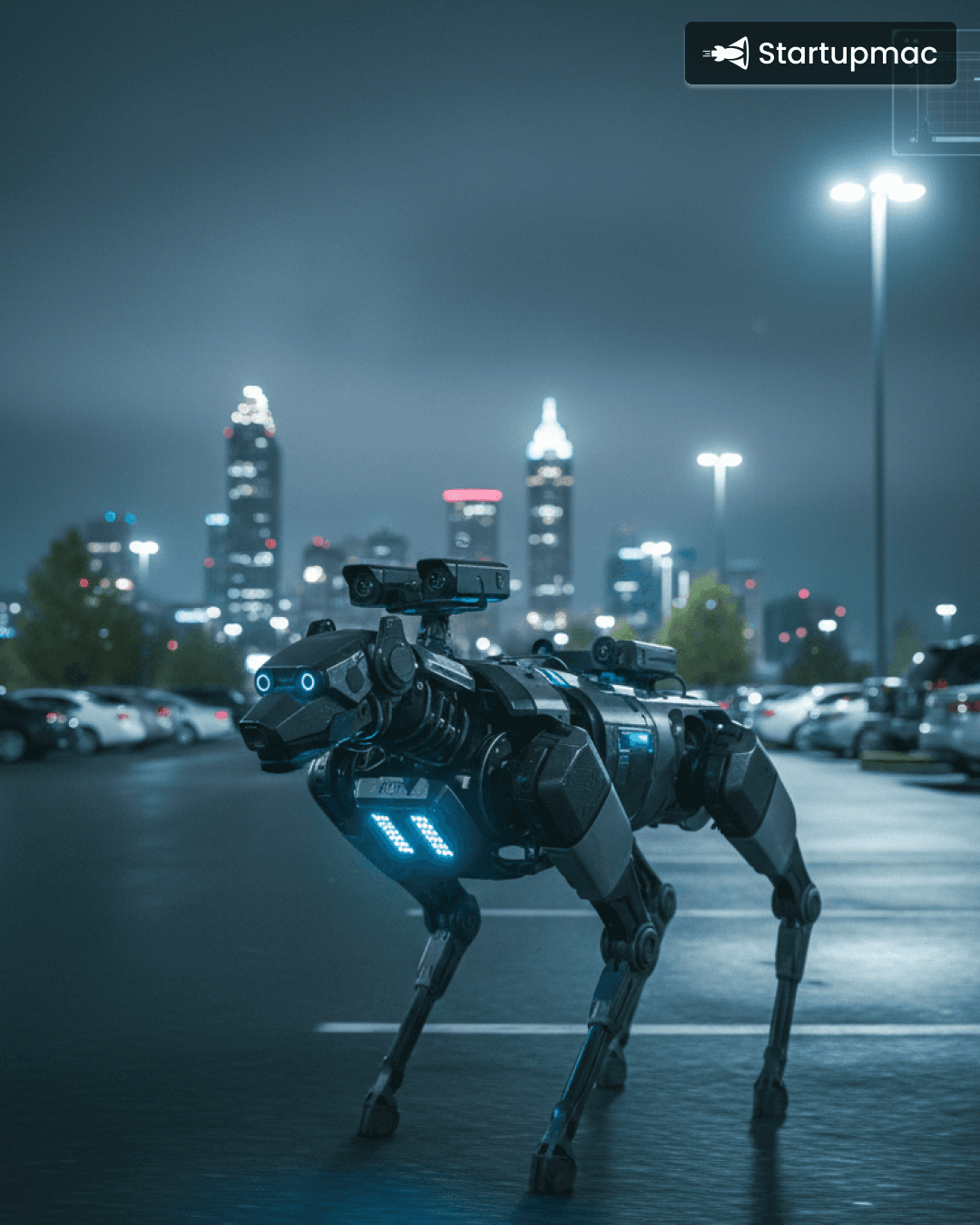

The future of urban security has officially taken a new, four-legged form in Atlanta. AI-powered robot dogs have commenced late-night patrols in commercial parking lots across the city, marking a pivotal step towards integrating advanced automation into public safety and surveillance. These sophisticated machines navigate the expansive, empty spaces with an uncanny precision, equipped with an array of high-definition cameras, thermal sensors, and environmental monitors, all designed to offer an unprecedented level of real-time oversight.
This innovative deployment is set to transform the traditional model of overnight security. Each robotic unit acts as a mobile surveillance hub, tirelessly covering vast areas that would typically require multiple human guards. Unlike their human counterparts, these robots do not require breaks, offering a constant and highly visible deterrent to potential illicit activities. The continuous stream of footage and data is instantly transmitted to remote human security teams, ensuring round-the-clock monitoring and rapid response capabilities.
Businesses embracing this cutting-edge technology cite cost-effectiveness and enhanced operational efficiency as primary drivers. The financial outlay for deploying these robotic sentinels is proving to be a more economical alternative to solely relying on traditional human night guards for basic surveillance and comprehensive documentation. Their onboard vision systems meticulously log all activity, creating an indisputable digital record that can be crucial for incident reporting and evidence gathering.
However, the rapid rollout of these autonomous units is not without its controversies. A growing chorus of ethical and legal experts is raising serious questions about the broader implications of such pervasive automated monitoring. Concerns are mounting around fundamental issues such as data ownership – who truly owns the vast amounts of footage collected? – and the long-term storage of these potentially sensitive recordings.
Perhaps the most significant ethical dilemma revolves around the use of facial recognition technology and the potential for intrusive monitoring in public spaces. People traditionally expect a certain degree of anonymity or at least less intense security measures in areas like parking lots. The constant gaze of an AI-powered robot dog, capable of facial recognition and intricate behavioral analysis, shifts this dynamic dramatically, infringing upon established norms of privacy.
Local authorities and the companies deploying these robots are now under pressure to establish clear guidelines and regulations. The debate focuses on striking a balance between leveraging advanced technology for improved safety and safeguarding the civil liberties of citizens. How will privacy be protected? What protocols are in place for data breaches? And where do we draw the line between security and surveillance creep?
As Atlanta leads the charge into this automated security paradigm, the world watches. The deployment of AI robot dogs is more than just a technological upgrade; it represents a profound societal shift, forcing communities to confront complex questions about the role of artificial intelligence in daily life, the future of human labor in security, and the evolving nature of personal privacy in an increasingly monitored world.
NEVER MISS A THING!
Subscribe and get freshly baked articles. Join the community!
Join the newsletter to receive the latest updates in your inbox.


