

The narrative surrounding automation in manufacturing has long been dominated by a single, anxious question: Will robots steal our jobs? For years, popular culture and economic pundits alike painted a grim picture of dark, humanless factories driven entirely by cold, mechanical precision. However, as the next generation of industrial technology takes hold, a much more optimistic—and realistic—truth is emerging. Robots are not replacing manufacturing workers; instead, they are enhancing them, acting as powerful tools that elevate human potential rather than eliminate it.
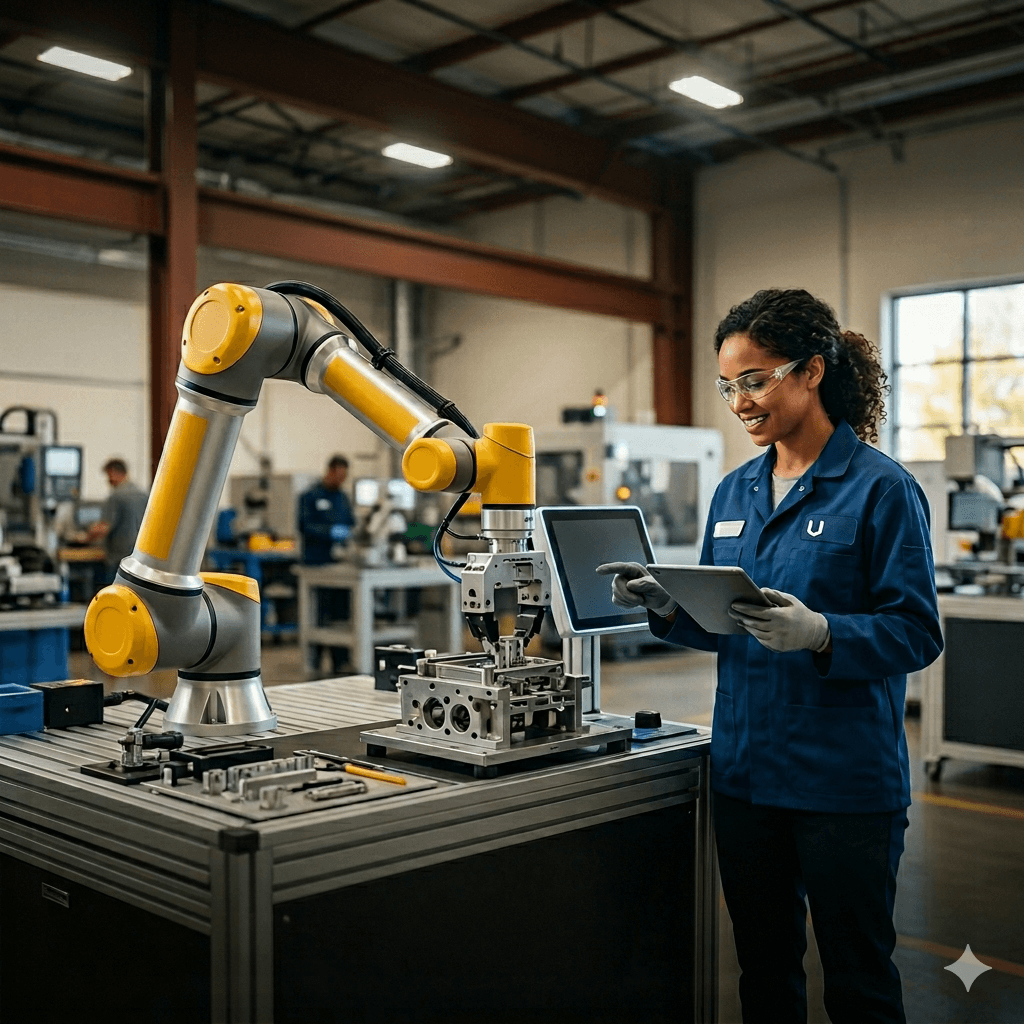
At the heart of this shift is the rise of collaborative robots, or "cobots." Unlike traditional industrial robots that operate behind massive safety cages due to their sheer size and speed, cobots are designed with advanced sensors to work safely alongside humans. They handle the repetitive, strenuous, and mind-numbing tasks—like lifting heavy chassis, sorting microscopic parts, or applying adhesives with flawless consistency—while their human partners oversee the operation, solve unexpected problems, and manage quality control.
By taking over the most grueling aspects of the assembly line, robots are dramatically improving workplace safety and worker longevity. Manufacturing has historically been plagued by repetitive strain injuries, chronic back pain, and exposure to hazardous environments. When a robot takes over a high-heat welding station or handles toxic chemical applications, it removes the human worker from harm's way. Workers are no longer wearing down their bodies for a paycheck; instead, they are shifting into supervisory roles where their cognitive skills are valued far more than their physical endurance.
This division of labor unlocks a uniquely human trait that no algorithm can replicate: creativity and adaptability. While a robot excels at doing the exact same thing a million times without error, it struggles when a custom order requires a sudden change, or when a minor flaw disrupts the production line. Humans possess the spatial awareness, critical thinking, and dexterity required for intricate craftsmanship and complex troubleshooting. By delegating the mundane to machines, workers are freed to focus on process optimization, innovation, and continuous improvement.
Consequently, the nature of manufacturing employment is undergoing a massive upskilling revolution. The modern factory worker is less of a manual laborer and more of a tech-driven technician. Companies are investing heavily in training programs to teach their existing workforces how to program, maintain, and collaborate with automated systems. This shift not only makes the manufacturing sector more attractive to a tech-savvy younger generation, but it also leads to higher-wage positions and clearer career advancement paths for seasoned workers.
Furthermore, this human-robot synergy is actually keeping manufacturing jobs local. In the past, companies frequently outsourced production to regions with lower labor costs to stay competitive. Today, by integrating smart automation, local factories can dramatically increase their productivity and reduce waste, allowing them to compete on a global scale while keeping their operations close to home. A highly efficient, robot-assisted local plant secures stable, high-tech jobs for the local community that might have otherwise been lost entirely.
Ultimately, the future of manufacturing belongs to the hybrid workforce. The goal of modern industrial design is not to build a factory that doesn't need people, but to build a factory where people can achieve the extraordinary. When human ingenuity is paired with robotic precision, productivity skyrockets, workplace injuries plummet, and jobs become more fulfilling. Robots aren't taking over the factory floor—they are simply giving manufacturing workers the ultimate upgrade.
NEVER MISS A THING!
Subscribe and get freshly baked articles. Join the community!
Join the newsletter to receive the latest updates in your inbox.


