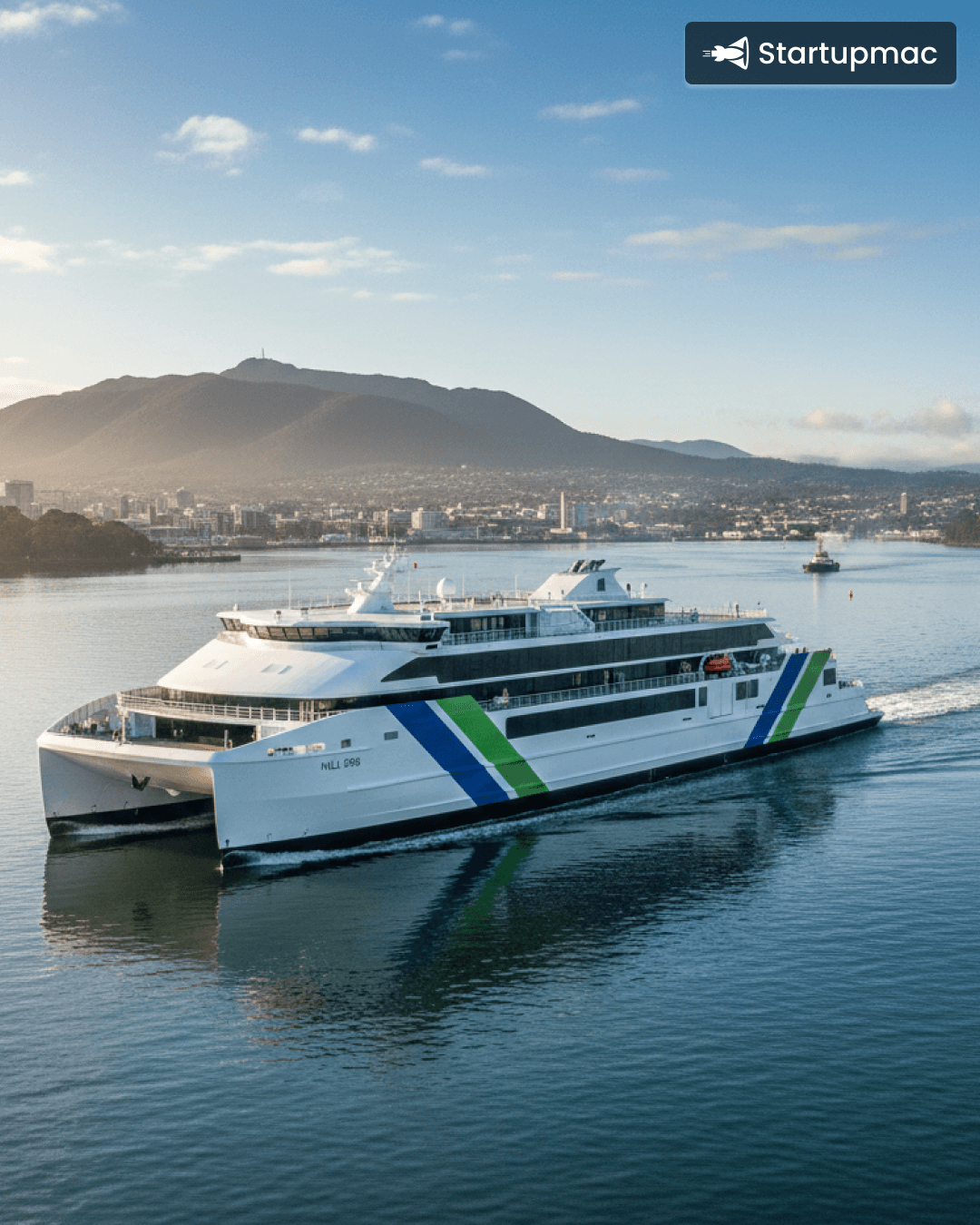

In a watershed moment for the global maritime industry, the world’s largest battery-electric vessel, known as Hull 096, successfully completed its inaugural e-motor trials on December 14, 2025. Designed and built by the renowned Australian shipbuilder Incat Tasmania, the 130-meter catamaran represents the pinnacle of sustainable naval engineering. Often dubbed the "Tesla of the Seas," the vessel’s activation marks the first time a ship of this immense scale—capable of transporting over 2,100 passengers and 220 vehicles—has operated solely on 100% battery-electric propulsion.
The heart of this maritime giant is a record-breaking Energy Storage System (ESS) that quadruples the capacity of any previous maritime battery installation. With over 40 megawatt-hours (MWh) of installed power, the ship carries approximately 250 tonnes of lithium-ion batteries. This massive power plant drives eight high-performance electric waterjets, allowing the vessel to maintain zero direct emissions while navigating—a feat previously thought impossible for ships of this weight and class.
Constructed for the South American ferry operator Buquebús, the ship’s journey to electrification was as dramatic as its launch. Originally designed to be powered by liquefied natural gas (LNG), the project was renegotiated mid-construction when Buquebús leadership pushed for a fully electric future. This required Incat to pivot from traditional gearboxes and fuel tanks to modular battery rooms. The result is a vessel that not only operates cleanly but is significantly lighter than its fossil-fuel counterparts, proving that large-scale decarbonization is a matter of conviction as much as technology.
The successful trial in the River Derwent was attended by high-ranking officials, including the Governor of Tasmania and Australian trade ministers, highlighting the ship’s status as a flagship for advanced manufacturing. Beyond its green credentials, Hull 096 (officially named the China Zorrilla) features world-class passenger amenities, including a 2,300-square-meter duty-free retail deck—the largest ever built on a ferry. This blend of commercial viability and radical sustainability is what experts believe will finally push the shipping industry toward a "post-diesel" era.
Maritime analysts are closely watching the project, as it addresses one of the hardest-to-abate sectors of the global economy. Shipping currently accounts for nearly 3% of global greenhouse gas emissions, and while small electric ferries have existed for years, scaling that technology to a 130-meter "Ro-Pax" vessel is a game-changer. By replacing massive diesel generators with silent, vibration-free electric motors, Incat is setting a new benchmark for passenger comfort and environmental stewardship in sensitive coastal ecosystems.
The next steps for the vessel include a series of high-speed open water trials throughout early 2026 before it is delivered to South America. Once in service, it will operate on the high-traffic route across the Río de la Plata, connecting Buenos Aires, Argentina, and Colonia del Sacramento, Uruguay. To support the vessel, high-capacity charging infrastructure is being installed at these ports to ensure the ferry can be recharged in the short windows between crossings, creating a fully integrated green transport corridor.
As 2026 begins, the success of Hull 096 is already influencing global shipbuilders. Incat has recently announced plans to scale production of smaller electric ferries, aiming to lead a global shift toward sustainable aluminium shipbuilding. The message from the Hobart shipyard is clear: the technology for cleaner oceans isn't just a future concept—it's already on the water and ready for deployment.
NEVER MISS A THING!
Subscribe and get freshly baked articles. Join the community!
Join the newsletter to receive the latest updates in your inbox.