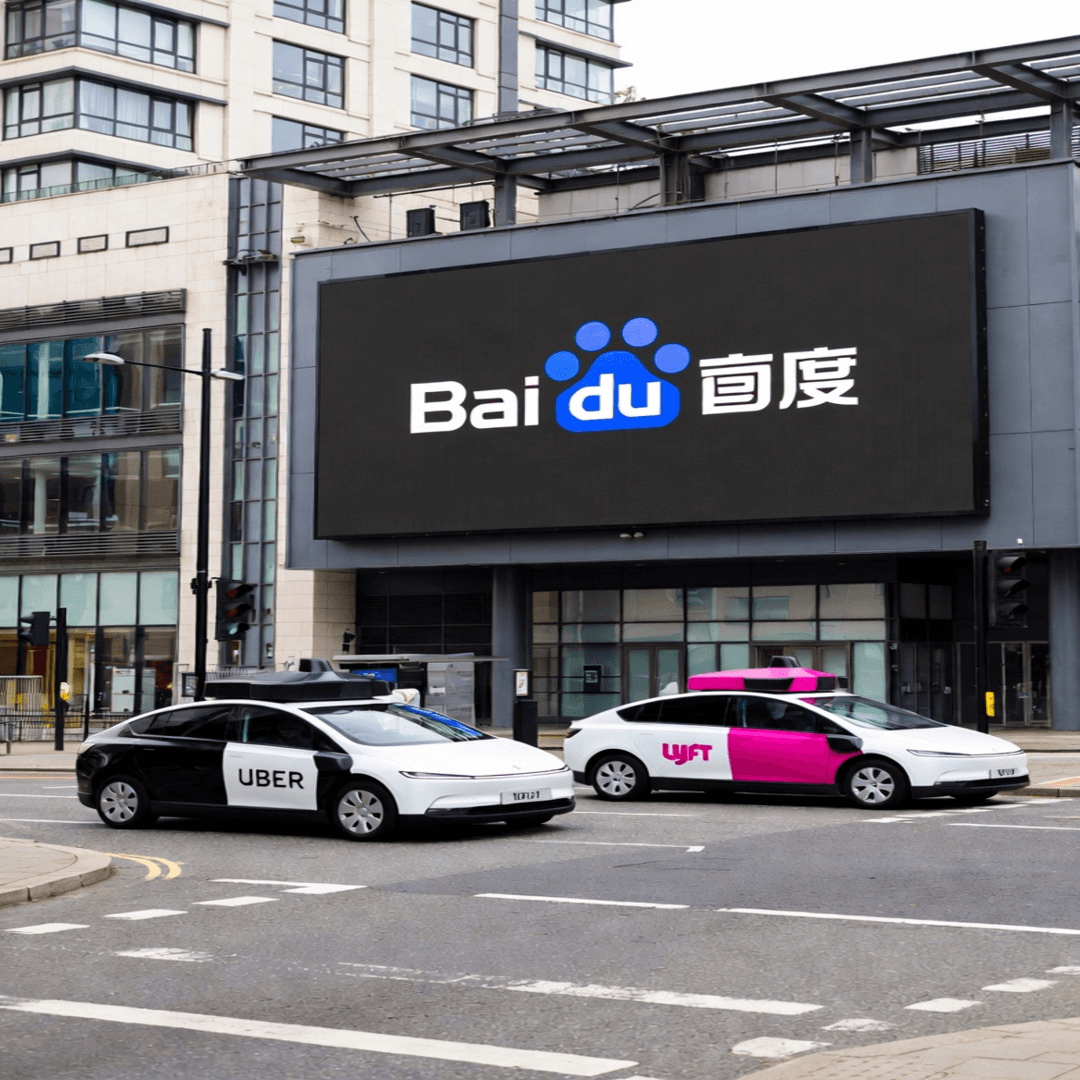

Uber Technologies Inc. and Lyft Inc. have each announced partnerships with Chinese technology giant Baidu Inc. to begin trials of driverless taxi services in the United Kingdom next year. The collaborations will see Baidu’s autonomous driving platform, Apollo Go, integrated into the ride-hailing networks of both companies as part of planned pilot programs.
Under the agreements, Baidu’s electric Apollo Go RT6 robotaxis — built specifically for ride-sharing operations — will join the Uber and Lyft fleets in London beginning in 2026, subject to regulatory approval. The first phases of testing are expected to start in the first half of the year, with Lyft aiming to initially deploy several dozen vehicles and scale up over time.
The UK government’s recently accelerated autonomous vehicle framework has made Britain a focal point for international robotaxi developers. The Automated Vehicles Act 2024 clarifies liability for incidents involving self-driving cars by assigning responsibility to the operating entity rather than the passenger, encouraging companies to pursue real-world testing in major cities like London.
Industry observers say the partnerships mark a significant step in the global race to commercialize autonomous mobility services, setting up direct competition between American ride-hailing platforms and Chinese autonomous technology providers within a European capital. Alphabet’s Waymo and London-based startup Wayve have also announced plans to test self-driving vehicles in the city next year.
For Lyft, the Baidu deal aligns with its broader international expansion following its acquisition of the European taxi app FreeNow. Lyft chief executive David Risher has highlighted plans to expand the robotaxi fleet from an initial few dozen vehicles to potentially hundreds, pending regulatory reviews and early test results.
Uber’s participation in the Baidu-powered trial builds on its wider strategy of integrating autonomous technology across its global network. The company has previously engaged in robotaxi partnerships in other markets and views the UK program as an opportunity to broaden transport options for users while exploring the operational and business implications of driverless services.
Despite optimism about safety and efficiency benefits, analysts note that autonomous fleets remain costly to operate and have yet to become broadly profitable. Some suggest a hybrid model — combining human drivers with robotaxis — may be necessary in the near term to maintain service quality and manage expenses.
NEVER MISS A THING!
Subscribe and get freshly baked articles. Join the community!
Join the newsletter to receive the latest updates in your inbox.