
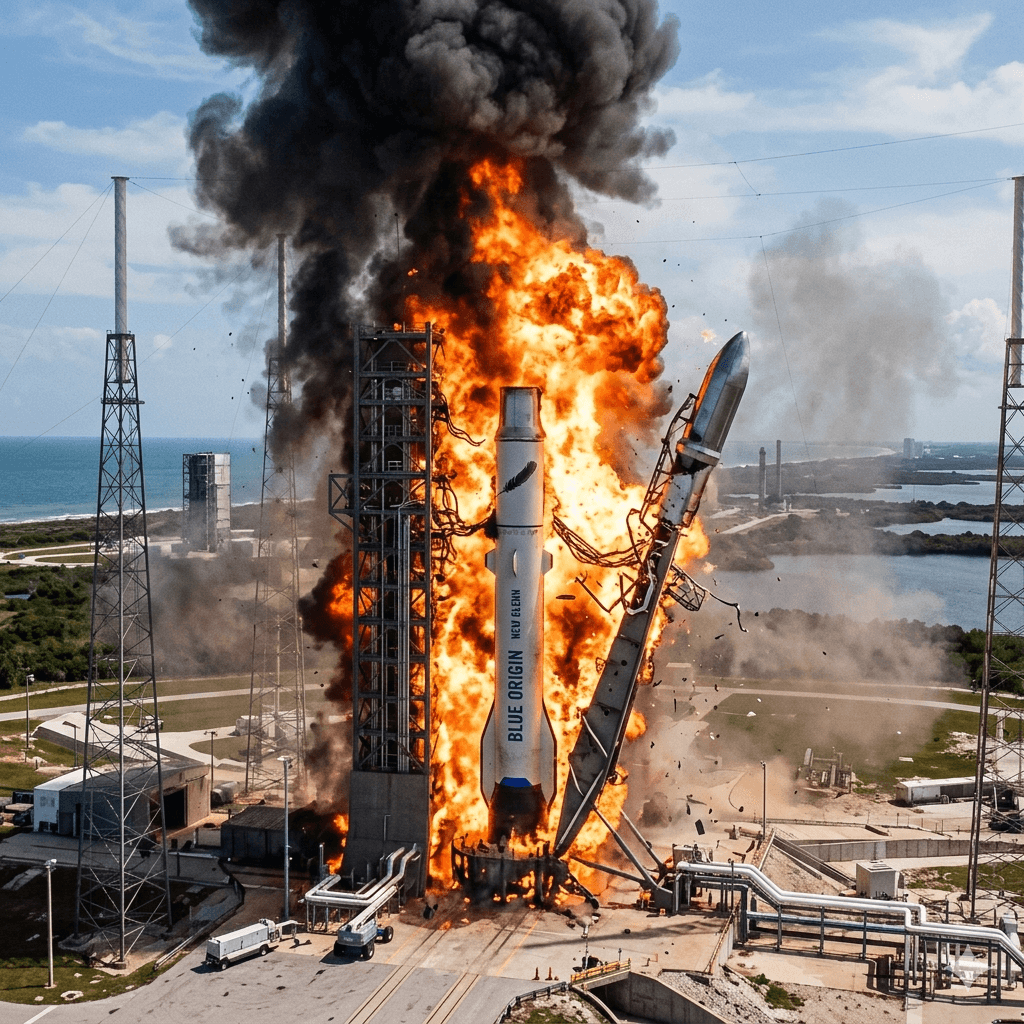

The private space race faced a fiery reminder of how unforgiving rocket science can be on May 28, 2026, when Blue Origin’s New Glenn rocket exploded during a pre-launch test at Cape Canaveral Space Force Station in Florida. The incident occurred at approximately 9:00 p.m. EDT at Launch Complex 36 (LC-36), lighting up the night sky along Florida's Space Coast with a massive, roiling fireball that could be seen for miles.
The catastrophic failure occurred during what is known as a "hotfire" or static fire test. This routine procedure secures the 320-foot-tall heavy-lift vehicle firmly to the ground while briefly igniting its seven methane-fueled BE-4 first-stage engines to verify system readiness before flight. Instead of a controlled ignition, a massive anomaly at the base of the vehicle triggered an explosion that caused the structural collapse of the first stage and completely consumed the rocket.
Fortunately, Blue Origin immediately confirmed that no injuries occurred as a result of the blast. "All personnel have been accounted for and are safe," Blue Origin and founder Jeff Bezos stated shortly after the incident. Bezos struck a resilient tone on social media, acknowledging the "very rough day" but firmly adding that the company would "rebuild whatever needs rebuilding and get back to flying".
The rocket was being prepared for its fourth-ever flight, which had been scheduled to lift off as early as June 4. The mission's intended payload was a batch of Amazon "Leo" internet satellites, part of Bezos’ commercial broadband initiative. In a stroke of financial and logistical luck, the valuable satellite payloads were not integrated onto the rocket during the ground test and were unharmed.
However, the damage to the launch facility itself is expected to cause major delays. Initial assessments showed that the blast destroyed the pad’s erector-gantry and heavily compromised its support structures. While Blue Origin CEO Dave Limp later shared that critical long-lead infrastructure, like the propellant farms and nearby integration facilities, remained largely intact, extensive repairs to LC-36—Blue Origin's only operational launch pad for New Glenn—will keep the fleet grounded.
This disaster is a massive hurdle for Blue Origin, which was already facing scrutiny. The company had only recently cleared a Federal Aviation Administration (FAA) grounding from its third mission in April, where an upper-stage anomaly left an AST SpaceMobile satellite stranded in an incorrect, unstable orbit. A brand-new investigation into this explosion will likely pause New Glenn operations for months.
The ripple effects of the explosion extend far beyond Amazon's commercial satellite schedule, directly threatening NASA's timeline for the Artemis program. New Glenn is the designated heavy-lift vehicle chosen to launch Blue Origin's "Blue Moon" Human Landing System, a vital element of NASA’s strategy to return American astronauts to the lunar surface. Industry analysts warn that fixing the pad and identifying the root cause of the explosion could stall progress, squeezing an already ambitious timeline for the lunar return.
NEVER MISS A THING!
Subscribe and get freshly baked articles. Join the community!
Join the newsletter to receive the latest updates in your inbox.


