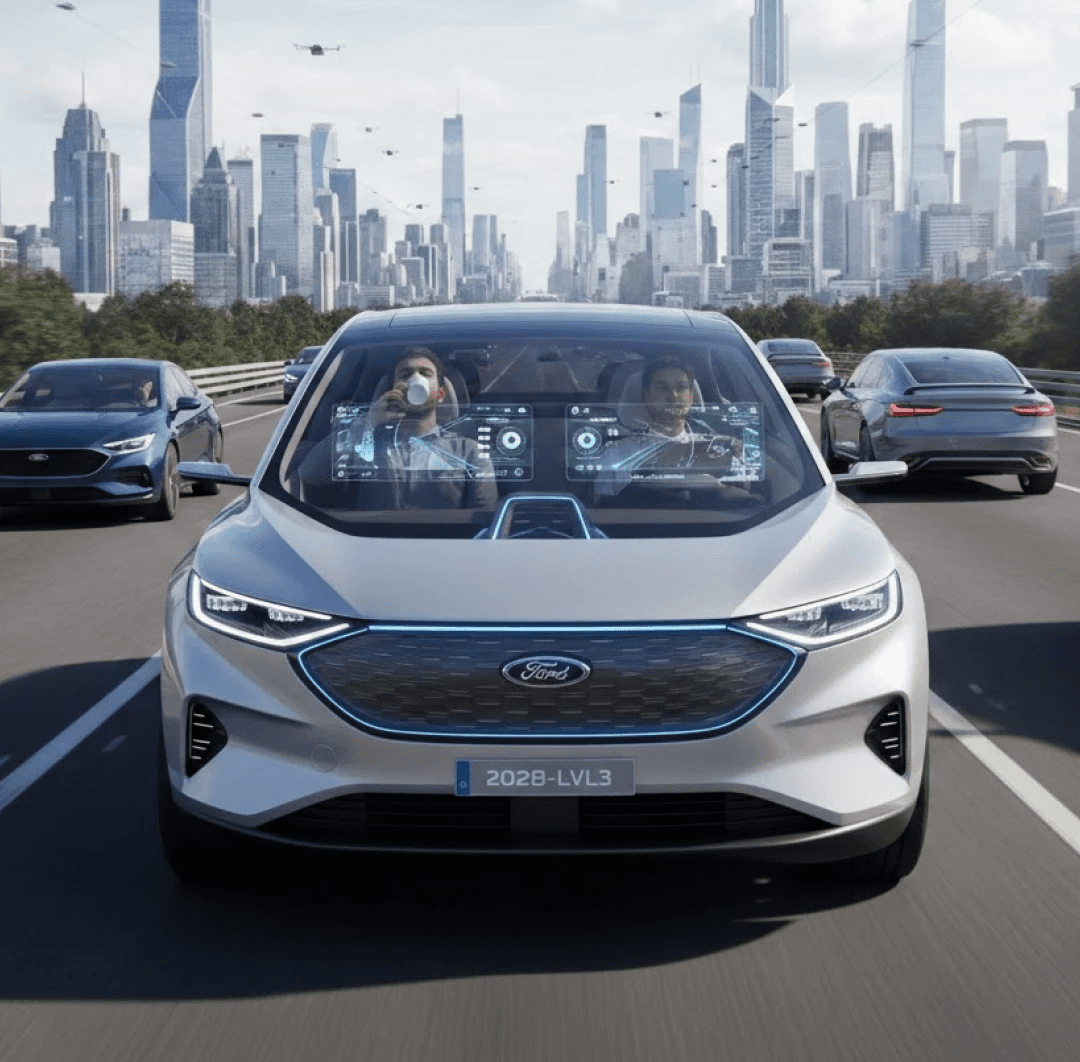

In a landmark announcement at CES 2026, Ford Motor Company unveiled a bold roadmap to bring "eyes-off" autonomous driving to the mainstream market by 2028. While luxury rivals like Mercedes-Benz and Cadillac have introduced Level 3 systems on six-figure flagship models, Ford is taking a radically different approach. The Detroit automaker confirmed that its first Level 3 system—allowing drivers to legally disengage their visual attention from the road—will debut on its upcoming Universal Electric Vehicle (UEV) platform, which is anchored by a highly anticipated $30,000 midsize electric pickup truck.
The transition from Level 2 "hands-free" to Level 3 "eyes-off" represents a fundamental shift in automotive technology and legal liability. Ford’s current BlueCruise system, a Level 2+ technology, requires drivers to keep their eyes on the road at all times. The 2028 evolution will permit drivers to look away and engage in other tasks on pre-mapped, controlled highways, with the vehicle assuming full responsibility for the driving task within those specific zones. Doug Field, Ford’s Chief EV, Digital, and Design Officer, emphasized that "autonomy shouldn’t be a premium feature," framing the move as a democratization of high-end safety and convenience.
To make this ambitious goal a reality, Ford is moving away from its previous reliance on external partners and is developing the entire software stack and hardware "brain" in-house. Central to this is the new High-Performance Computer Center, a zonal computing unit that unifies infotainment, automated driving, and networking into a single, powerful module. By owning the end-to-end technology stack, Ford claims it can offer 30% more capability at a significantly lower production cost, which is crucial for maintaining the target $30,000 price point for the base vehicle.
Unlike Tesla’s "Vision-only" approach, Ford confirmed it will utilize Lidar (Light Detection and Ranging) sensors to support its Level 3 capabilities. This laser-based technology provides a precise 3D map of the vehicle’s surroundings, offering a layer of redundancy that many engineers believe is essential for safe eyes-off operation. This technical choice highlights the growing divide in the industry between companies betting on pure AI vision and those opting for a multi-sensor suite to ensure regulatory approval and passenger safety.
The rollout will happen in stages, beginning with the launch of the $30,000 midsize electric pickup in 2027. While the truck will arrive with a next-generation version of Level 2 BlueCruise, the "eyes-off" Level 3 functionality will be enabled via software updates and optional hardware packages in 2028. Ford is still exploring various business models for the feature, considering both one-time purchase options and monthly subscription services to keep the initial cost of the vehicle accessible to everyday buyers.
Ford’s 2028 vision also includes a new AI-powered assistant, set to launch in phone apps early in 2026 before being integrated directly into vehicles by 2027. This assistant is designed to be context-aware, capable of analyzing a photo of cargo to see if it will fit in the truck bed or calculating towing capacities in real-time. By the time Level 3 driving arrives in 2028, Ford envisions a seamless ecosystem where the car handles the commute while the AI assistant manages the driver’s logistics and entertainment.
As the industry watches closely, the success of this "Level 3 for the many" strategy will depend on Ford's ability to hit its aggressive cost targets and clear the high bar of regulatory scrutiny. If successful, 2028 could mark the year that the "Model T of autonomy" officially hits the road, proving that the future of self-driving tech isn't just for the privileged few, but for the millions of drivers who seek a safer, more productive daily commute.
NEVER MISS A THING!
Subscribe and get freshly baked articles. Join the community!
Join the newsletter to receive the latest updates in your inbox.