
In a landscape where the rapid expansion of Artificial Intelligence (AI) is pushing global power grids to their limits, Google has made a definitive move to secure its energy future. The tech giant's parent company, Alphabet, recently announced the acquisition of Intersect Power for approximately $4.75 billion in cash plus the assumption of debt. This is not merely a corporate merger; it is a calculated effort to ensure that the massive computational requirements of Google’s AI infrastructure are met with reliable, large-scale renewable energy.
For years, the technology sector has relied on Power Purchase Agreements (PPAs) to claim "green" status, but the surge in AI demand has changed the stakes. Data centers now require immense amounts of electricity around the clock. By bringing a specialist like Intersect Power in-house, Google is moving from being a customer of clean energy to a primary developer. This vertical integration allows Google to directly control the pipeline of energy projects, ensuring that power generation grows in lockstep with its computing needs.
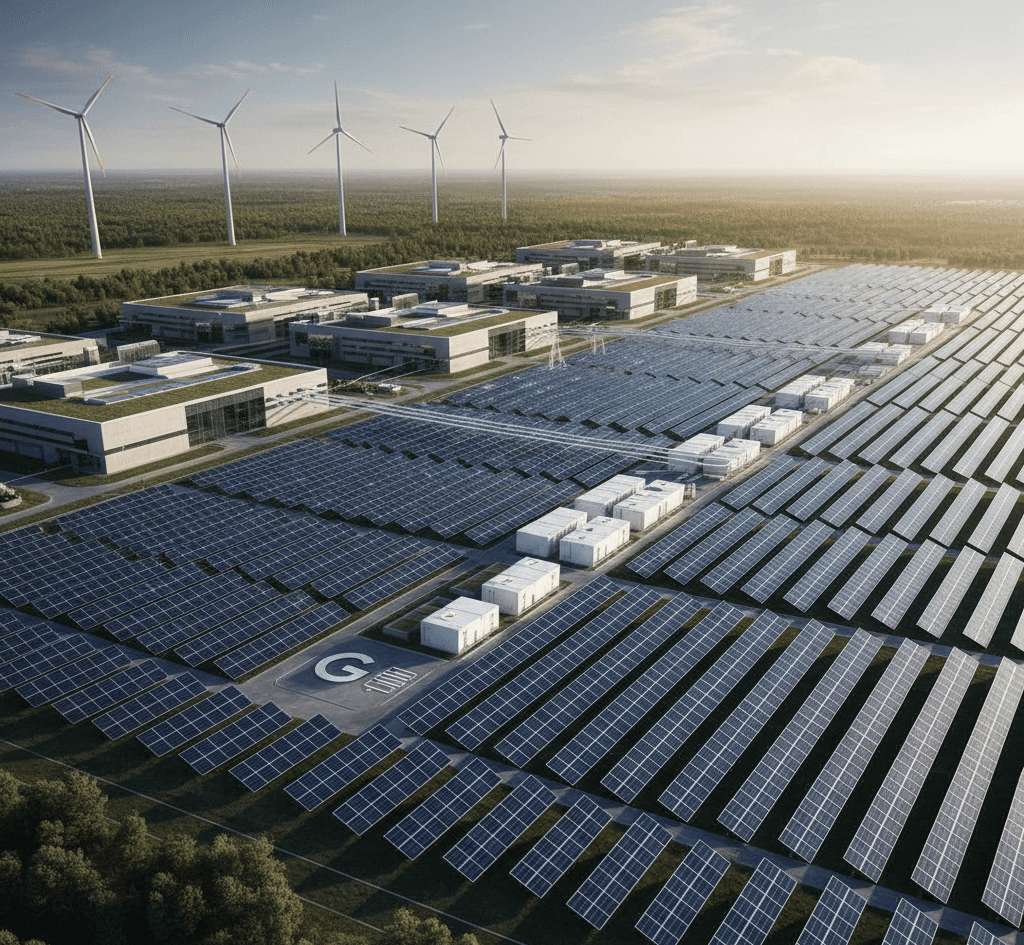
A core component of this strategy is the concept of co-location. Traditional power delivery is often plagued by "gridlock"—lengthy delays in connecting new plants to public utility lines. Intersect Power specializes in building "energy parks" where solar arrays and massive battery storage systems are constructed on the same site as the data centers. This "behind-the-meter" approach allows Google to bypass traditional grid bottlenecks, delivering electricity directly to the servers that power everything from Search to generative AI models.
The acquisition includes Intersect’s world-class engineering team and a pipeline of projects totaling multiple gigawatts. One of the most significant projects currently under construction is the Quantum Clean Energy Project in Haskell County, Texas. This site features 640 MW of solar power and 1.3 GWh of battery storage built alongside a massive data center campus. It serves as a blueprint for the future: a self-sustaining ecosystem where the sun powers the digital world without adding strain to the local community's electricity supply.
Despite being owned by Alphabet, Intersect Power will continue to operate under its own brand and be led by its founder, Sheldon Kimber. This independence is designed to maintain the entrepreneurial speed that allows Intersect to navigate complex permitting and construction phases. While Google gains a dedicated energy arm, Intersect gains the capital and long-term vision of one of the world’s most powerful companies, creating a formidable partnership in the race for AI dominance.
This $4.75 billion deal also underscores a shift in how "Big Tech" views its environmental responsibilities. As AI models become more complex, their carbon footprint becomes a major concern for investors and the public. Google’s goal is to operate on 24/7 carbon-free energy by 2030. By owning the generation assets—including advanced geothermal and long-duration battery storage—Google can ensure that its AI breakthroughs don't come at the cost of the planet’s health.
Ultimately, Google’s acquisition of Intersect Power signals a new era for the industry. Modern infrastructure is no longer just about fiber optics and server racks; it is about the raw electrons that fuel them. As Sundar Pichai, CEO of Google and Alphabet, noted, this move allows the company to "reimagine energy solutions" for a competitive AI landscape. By securing its own clean energy hubs, Google is building a resilient, sustainable foundation that could define the next decade of technological innovation.
NEVER MISS A THING!
Subscribe and get freshly baked articles. Join the community!
Join the newsletter to receive the latest updates in your inbox.