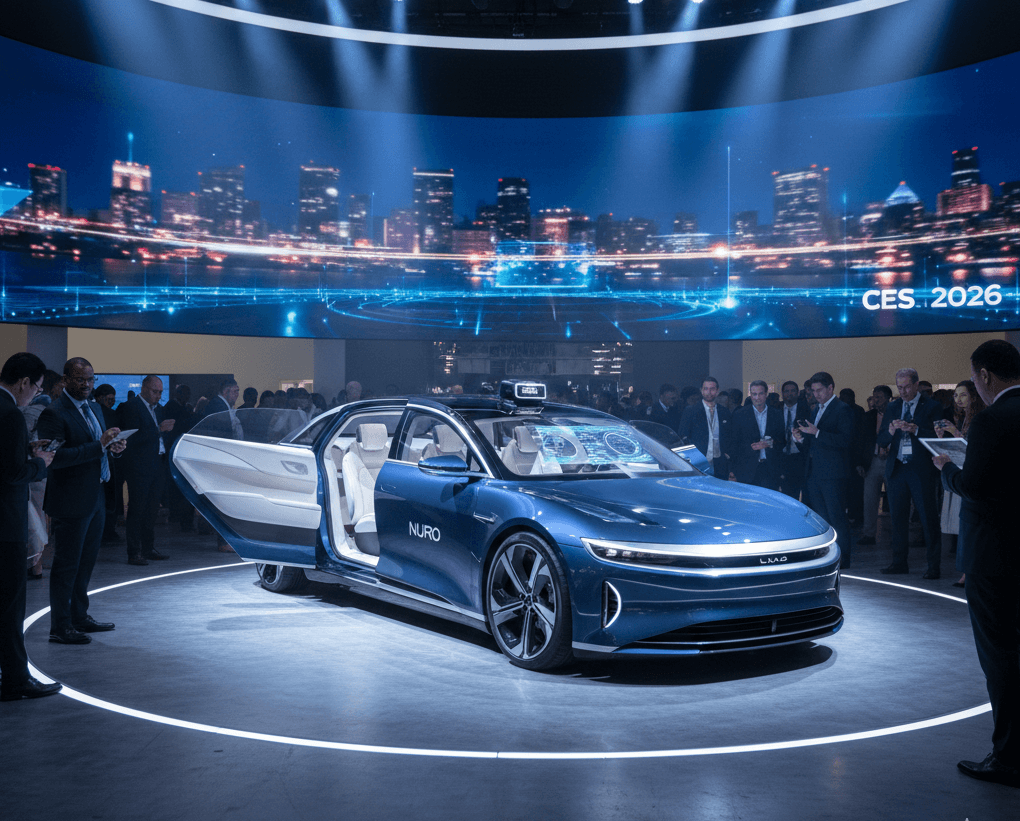

The landscape of autonomous ride-hailing shifted dramatically at CES 2026 in Las Vegas as Uber, Lucid Group, and Nuro unveiled their "production-intent" robotaxi. Built on the award-winning Lucid Gravity SUV platform, this vehicle represents a major strategic pivot for Uber, which is now positioning itself as a premium platform partner for high-end autonomous fleets. By combining Lucid’s luxury engineering with Nuro’s Level 4 self-driving technology, the trio aims to bring a new level of sophistication to the streets, moving beyond the utilitarian designs of earlier autonomous competitors.
Technologically, the robotaxi is a powerhouse, utilizing the NVIDIA DRIVE AGX Thor platform to process real-time AI and sensor data. The vehicle features a custom-built, low-profile roof "halo" that houses high-resolution cameras, solid-state LiDAR, and radar, providing a full 360-degree field of perception. A unique feature of this halo is an integrated LED display that shows the passenger's initials, a personalization touch designed to help riders easily identify their car at crowded pickup points.
The interior of the vehicle showcases Uber's first-ever custom-designed in-cabin rider experience. With a spacious layout that comfortably seats up to six passengers, the cabin feels more like a mobile lounge than a taxi. Riders have full control over their environment via interactive touchscreens, allowing them to adjust climate settings, activate seat heaters, and personalize their music. These screens also provide a real-time visualization of what the car’s AI is seeing—such as pedestrians and traffic lights—to build trust and transparency with the passengers.
Testing is already well underway, with Nuro leading autonomous on-road validation in the San Francisco Bay Area as of December 2025. While these early prototypes still use safety operators, the goal is to transition to fully driverless commercial operations later this year. This "factory-integrated" approach is a significant advantage; unlike many competitors who retrofit existing cars with bulky sensors, Lucid will install all autonomous hardware directly on the assembly line at its Casa Grande, Arizona factory, ensuring a sleeker design and lower production costs.
For Uber, this partnership is a cornerstone of its broader strategy to deploy 20,000 or more autonomous vehicles over the next six years. Having divested its own self-driving unit years ago, Uber is now the ultimate marketplace for robotaxis, having signed similar deals with Waymo and Tesla. However, the Lucid-Nuro partnership offers a "premium" tier to the Uber app, likely priced at Uber Black levels, catering to business travelers and families who desire a more luxurious, private experience.
Lucid Motors also stands to benefit significantly from this deal. As the luxury EV market faces increased competition and cooling demand, this 20,000-vehicle commitment provides a stable, long-term revenue stream. Diversifying into the robotaxi market allows Lucid to maximize the utility of its Gravity platform while demonstrating the durability and efficiency of its electric powertrain in high-utilization commercial environments. It is a win-win that leverages Lucid's hardware excellence to fuel Uber’s digital platform.
The commercial rollout is slated to begin in the San Francisco Bay Area later in 2026, pending final regulatory approvals from California authorities. As the "Great Realignment" of the auto industry continues, this launch underscores that the future of mobility is not just about being electric—it is about being intelligent, luxurious, and seamlessly integrated into our digital lives. With production set to start soon, the era of the high-end, driverless group ride is officially arriving.
NEVER MISS A THING!
Subscribe and get freshly baked articles. Join the community!
Join the newsletter to receive the latest updates in your inbox.