
On January 12, 2026, Chinese electric vehicle (EV) powerhouse Xpeng Motors set an aggressive roadmap for the year, revealing a target to sell between 550,000 and 600,000 vehicles. Announced during an internal strategy meeting in Guangzhou, this goal represents a nearly 40% increase from the record 429,445 units delivered in 2025. To meet this ambitious milestone, Xpeng is shifting its identity from a traditional automaker to a "Physical AI" company, integrating advanced chips and robotics into its core automotive strategy.
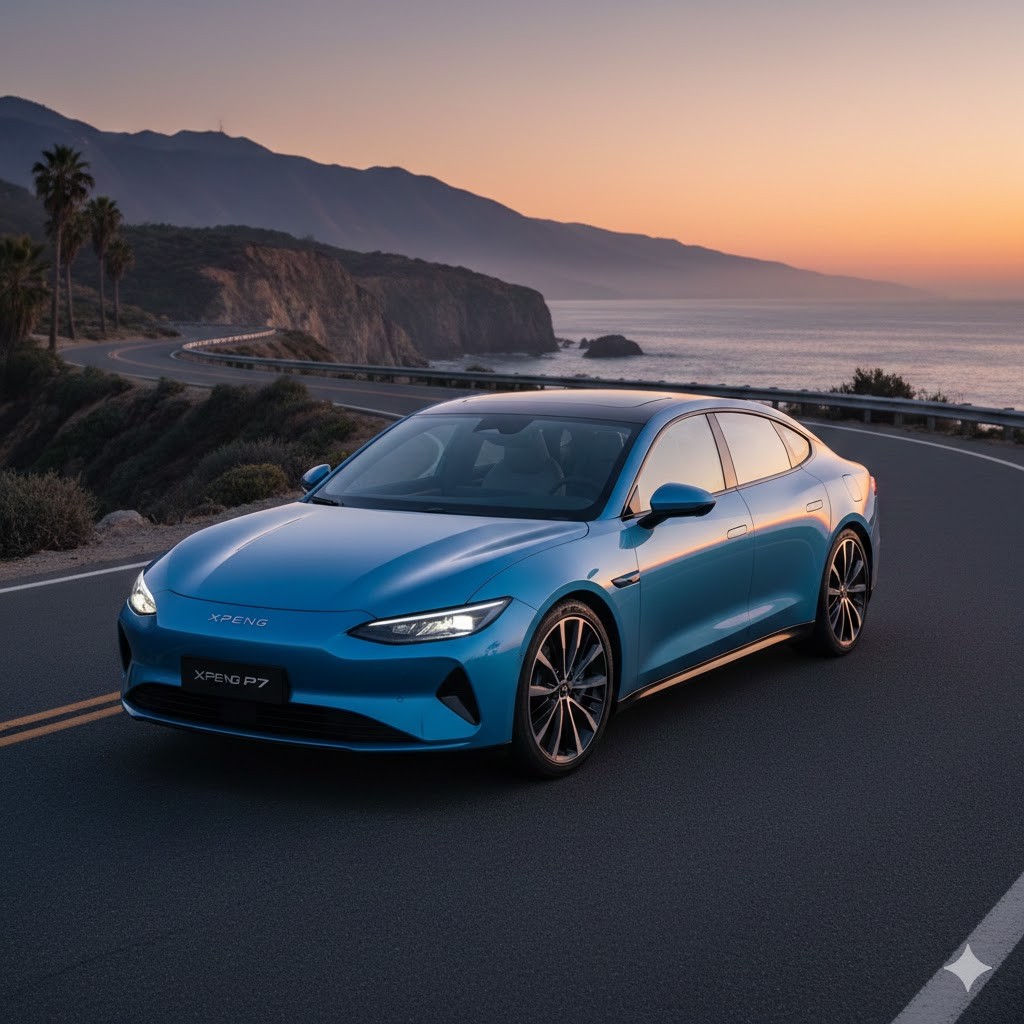
The cornerstone of Xpeng’s 2026 growth is a "one car, dual-function" model strategy, which sees the brand expanding into the Extended-Range Electric Vehicle (EREV) market. By launching the "Kunpeng Dual-Energy" system, Xpeng now offers both pure electric (BEV) and super-extended-range options for its flagship models, including the newly debuted 2026 Xpeng P7+ and G7 SUV. The G7 Super EREV, in particular, has made headlines with a combined range of up to 1,704 km, specifically designed to eliminate range anxiety and capture a broader segment of the mainstream market.
Technological differentiation remains Xpeng's primary weapon against competitors like BYD and Tesla. In early 2026, the company began the mass production of its proprietary Turing AI chip, boasting a computing power of 750 TOPS. This hardware serves as the backbone for the second-generation Visual-Language-Action (VLA 2.0) model, which Xpeng claims is the industry’s first physical-AI system capable of foundational L4 autonomous driving. This "software-defined" approach allows Xpeng to offer tiered intelligent driving upgrades, ensuring its vehicles stay at the cutting edge through over-the-air (OTA) updates.
International expansion is the second pillar of the 600,000-unit goal, with Xpeng aiming to double its overseas sales in 2026. Following a successful 2025 where international deliveries surged by 96%, the brand is now establishing a presence in 60 countries. To mitigate tariff risks and logistics costs, Xpeng is forming independent supply-chain teams and local manufacturing partnerships. Key projects include trial production at the Magna plant in Austria for European markets and a localized hub in Malaysia to serve the ASEAN region.
Beyond standard passenger cars, 2026 marks the year Xpeng's more futuristic ventures become commercial realities. The company has confirmed that its "Land Aircraft Carrier" modular flying car and its humanoid robot, IRON, will enter large-scale mass production this year. While these "new species" of mobility will initially be available in China, they serve as a powerful marketing halo for the brand's AI capabilities, positioning Xpeng as a pioneer in the next era of embodied intelligence.
Despite the optimistic targets, Xpeng faces a "brutal and bloody" competitive landscape, according to CEO He Xiaopeng. The Chinese EV market has transitioned into a "stock competition" stage, where growth for one brand often means crowding out another. To sustain its momentum, Xpeng is leaning heavily on its Mona series, which targets the tech-savvy middle class with more affordable pricing, such as the Mona M03 and the new compact D03 SUV, designed to drive high-volume "system threshold" growth.
As Xpeng begins street trials for its Robotaxi service and rolls out its VLA 2.0 software to customers in March 2026, all eyes are on whether the company can maintain its rapid scaling without compromising its path to profitability. If successful, hitting the 600,000-unit mark would firmly establish Xpeng not just as a top-tier Chinese exporter, but as a global technology architect redefining how humans interact with the physical world through AI-powered mobility.
NEVER MISS A THING!
Subscribe and get freshly baked articles. Join the community!
Join the newsletter to receive the latest updates in your inbox.